
Blog

  • The First Rule of Being a Game of Thrones Fan is…

    Warning: Spoilers for Game of Thrones Season 4 ahead. Although, being a Game of Thrones-related post means inherent spoilers… anyway, proceed with caution.

    I recently started watching Game of Thrones – particularly out of intrigue and the pressure of wanting to find out what the hell it is that my friends are raving about each week – from their horrified recounts in the aftermath of that episode (“Rains of Castamere”, S3E09), to the constant skirting of certain book-reading watchers who are about to let slip an accidental spoiler.

    So I began watching this show. And suddenly transformed into a Westerosi myself. I knew vaguely what to expect in some of the series’ key episodes – I wasn’t as surprised by the Red Wedding as most uninitiated non-book-readers were, for example. But I still experienced that sense of shock and horror at such a gruesome visual, visceral rendition, where everything from the acting to the mis-en-scéne to the music ensnared my attention.

    And then Season 4 began. I was finally on-par with my Thronian friends. We were able to discuss our disgust at some favourite characters’ treatment, our glee at the deaths of other deeply-hated ones, and skirt the book-reading friends together. Which was fun. Season 4 was awesome, in true Game of Thrones quality-television style. Each episode carried the gravitas, beauty and action we’ve come to take for granted from this show. Until we got to Season Four, Episode Eight: The Mountain and the Viper.

    This is where I learnt my lesson. You see, being a GoT fan requires a special skill-set. You can’t mindlessly rush into the franchise and start picking your favourite characters. In fact, the first rule of Game of Thrones Fandom is You Do Not Have Favourite Characters. Because Mr George R.R. Martin is a sick bastard. He kills characters ruthlessly.

    This season, we were introduced to Oberyn Martell, the most badass character on television during those eleven-odd weeks that Season 4 was on-air. The entire Westerosi Fandom was rooting for him (well, us non-book-readers, at least). I was rooting for him. He was wronged by those horrible Lannisters. He was carrying a crimson vengeance. He was out to take names and kill some bad guys. This is the stuff epic stories are made of.

    And then he has to go and die. And not just die, but get totally obliterated in the monist gruesome, gut-wrenchingly shocking manner possible. Seriously, are they even allowed to show stuff like that on television??

    When “The Mountain and the Viper” ended with that sickening tracking show out of the fatal arena, and the credits began to roll, I could do nothing but just sit and stare at the screen in utter disbelief.

    That’s the raw power of a cult show like Game of Thrones. It draws its audience in, makes them invest their attention and emotions for particular characters, and then wrenches them away from you. It’s brilliant storytelling, really. This show (and its enigmatic author, Co-Executive Producer and sometimes-writer-of-episodes George R.R. Martin) has the guts to do stuff that other series can’t even dream of doing.

    And whilst we were made to feel bitter at the series’ creators and author, and take to social media to rage about what we witnessed, the season’s finale truly made up for it. Season 4 ended with a powerful set-up for the next ten episodes (a whole year of waiting! Say it isn’t so!), and an emphatically positive arc with some spectacularly beautiful moments (Stannis Baratheon aka “Stannis the Mannis” charging on the wildlings, and Daenerys’ and Arya’s story lines in particular).

    I’ve learned to distance myself from the characters, yet in doing so the irony is that I’ve become even more invested in the series; Martin has created a richly textured world of political intrigue, fierce feuds and elements of fantasy that make for compelling consumption in both words and visuals. Whilst I’m hesitant to read the sprawling books for want of keeping the mysterious aura of the television series, I can’t help but delve into the wiki pages and fan-made social media streams to immerse myself in the Thronian culture.

    So when Season Five comes a-knocking on my television time, I will indeed be better prepared, because, after all: the First Rule of Game of Thrones is You DO NOT Get Attached To Any Character or Being.
  • Hello (again)

    HELLO

    I’ve changed Pixelated Thinking’s web address.

    My new blog address is now www.rahuldowlath.net

    Why the change? Well, I kind of messed up my domain name transfer (it’s very complicated and boring and I won’t go into the details here). Anyway, I’ve decided to relinquish the .com address until it becomes available again with the registrar (which I hope will happen within the next year). But for now, and probably for a long time to come, I will be using www.rahuldowlath.net as the main access point to my blog, where I publish my thoughts on everything from science and technology to books, television and movies.

    If you subscribe to this blog via email, you don’t need to do anything.

    Thank you for supporting my blog and my writing. I have some fun posts lined up for you. You can follow me on Twitter to find out when the latest post is published: www.twitter.com/RahulDowlath.


  • In the midst of darkness…

    I dimly perceive that whilst everything around me is ever changing, ever dying, there is underlying all that change a living power that is changeless, that holds all together, that creates, dissolves, and re-creates. . . . in the midst of death life persists, in the midst of untruth truth persists, in the midst of darkness light persists.

    –Mahatma Gandhi

  • Red Civilisation: Our Future among the Stars

    Maybe we’re on Mars because of the magnificent science that can be done there — the gates of the wonder world are opening in our time. Maybe we’re on Mars because we have to be, because there’s a deep nomadic impulse built into us by the evolutionary process — we come, after all, from hunter-gatherers, and for 99.9% of our tenure on Earth we’ve been wanderers. And the next place to wander to is Mars. But whatever the reason you’re on Mars is, I’m glad you’re there. And I wish I was with you.

    –Carl Sagan, Cosmos

    Contemplating a life on our neighbouring Red Planet has always fascinated me. In 2009, I presented a talk for my English class on colonizing Mars, and the research I gleaned from that exercise has fuelled my imagination ever since. After reading Carl Sagan’s excellent book Cosmos, and watching the brilliant reboot of the series hosted by one of my favourite scientists, Neil deGrasse Tyson, I have once again begun to think about what it would be like to build a society on Mars.

    Earth’s human population is increasing at an alarming rate. This is having significant spiralling effects on other aspects necessary to sustain life: the depletion of natural resources, subsequent environmental damage, and myriad health problems. In essence: our planet is being hotly contested for the sustenance of our precariously built civilisation.

    Thus we have two options: to seek out solutions to our current predicament (which is hastily being done by passionate people from diverse professions). And to seek out other possible places for habitation.

    The latter option is both absurdly outlandish and deeply compelling to those with an affinity for the creation of something new.

    Human beings have always been nomadic – we’ve always had the impulse to explore, to go beyond the horizon and discover things. It makes sense, then, that the quest for Mars has always been on our roadmap. It’s just the challenge of getting there that’s been the obstacle on our path. We’ve made significant steps, though: NASA’s Mars rovers, the most recent of which, Curiosity, is doing a sterling job of understanding Mars. The robots getting us closer to that ultimate goal of finally stepping on this mysterious red world…

    But when (and not “if”) we get there, what will our civilisation be like? We have the opportunity to start fresh. To reimagine our politics, to create a new culture – to develop, if you like, a “Society 2.0.” After a generation, we will be the Martians. And the shaping of anther planet will take our species from being shaped by the evolutionary forces of the Cosmos to being the shapers of worlds, the creators of entire planets, and disseminating our species further amongst the stars.

    It’s an exciting and immensely frightening prospect. Perhaps there will be friction between those who dwell on the “home planet” (Earth) and the new society developing on Mars. What will interplanetary economics be like? Could there be a possibility of trade between both planets? And, of course, management of resources has the potential to spark the fires of war. The surface area of Mars is equal to the entire landmass of Earth; if our population continues its exponential rise and we end up shunting a fraction of that off to another world, there will inevitably come a time when Mars itself will be facing similar challenges. And discoveries of precious resources could be another reason for planetary invasions and dissent between both worlds… Of course, issues of religion will also be a major factor: religion was, after all, a major component of historic expeditions to new worlds. Now, with the momentum of science and the advancement of technology, would we be able to transcend such things, or to effectively update our philosophies to encompass dual-world inhabitations?

    The contemplation of future societies amongst the stars is filled with rhetoric. But it is these questions that can spark further debate about the sociocultural aspects of inhabiting other worlds. Imagine travel brochures offering getaways to Olympus Mons… “experience fabulous Valles Marineris…” New architecture for a new world, new means of transport, living, working, entire professions rewritten for a red planet…

    I leave you with this message for Mars by Sagan:

    “The gates of the wonder world are opening in our time…” –Carl Sagan


  • Can Agents of SHIELD stand on its own?

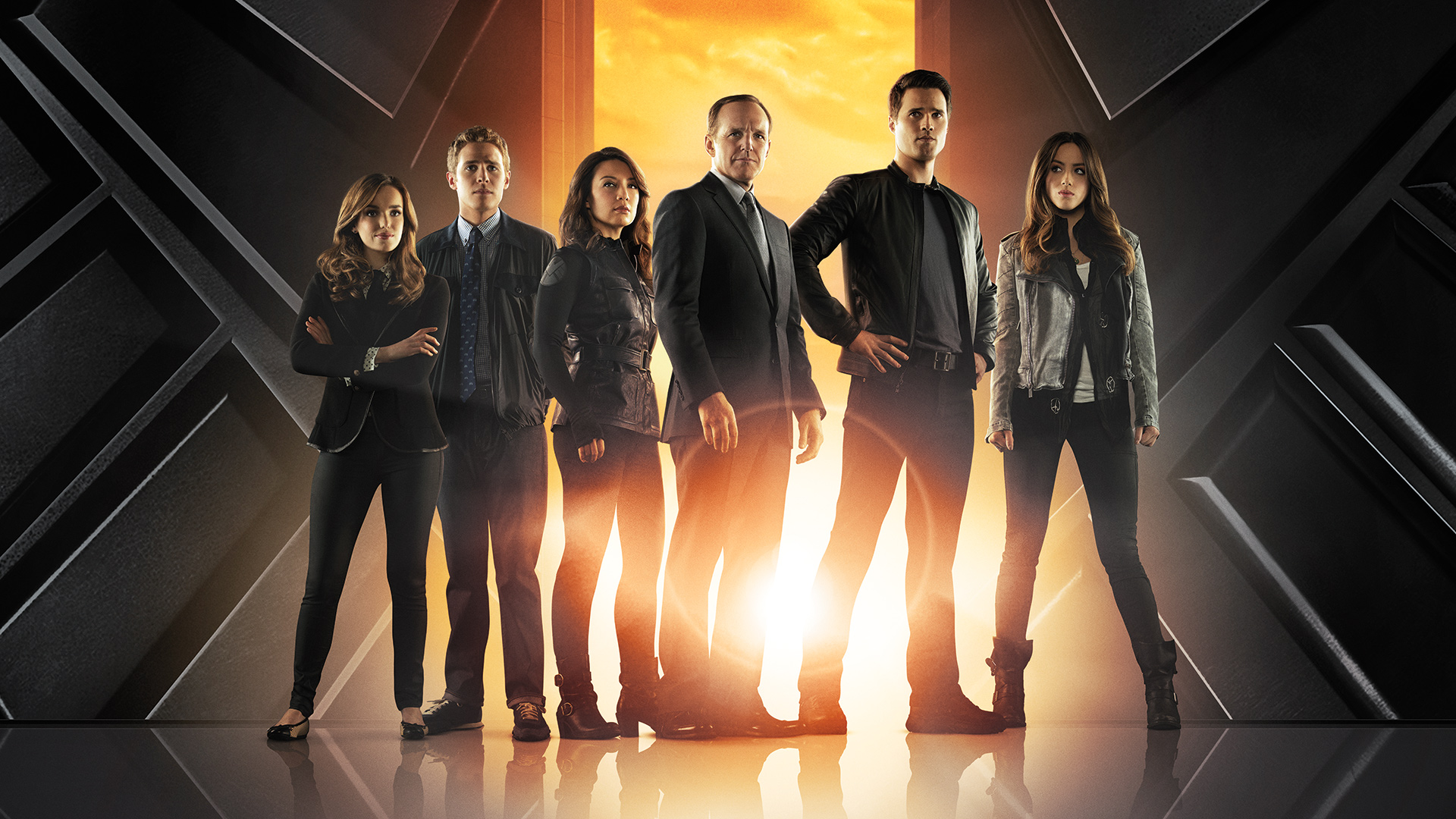
    MARVEL'S AGENTS OF S.H.I.E.L.D.

    I’ve written before about my impressions on the latest turns in Marvel’s Agents of S.H.I.E.L.D. series. It started off excruciatingly slow, with the mission-a-week plots becoming repetitive and boring. But now we all know that this was simply a ruse, a setup of layering in anticipation for the tentpole movie that is Captain America: The Winter Soldier.

    Agents of S.H.I.E.L.D. itself began following the aftermath of the “Battle of New York” which happened in The Avengers. So essentially, this series revolves around these major Marvel movies. My question, then, is can Agents of S.H.I.E.L.D. stand on its own? It took a major picture like The Winter Soldier to reignite the fires of the show, and the last few episodes of Season 1 are indeed explosive and riveting. But that’s mainly because they’re running off the momentum of the film’s events.

    Marvel has the opportunity to revolutionise the television aspect of comic book adaptations, similar to how they changed the game with their Cinematic Universe and the Avengers films. Could Agents of S.H.I.E.L.D. become a major Marvel property like the films it supports? Or is it merely relegated to the support-side, to maintaining fan interest in the studio between the major films?

    If Agents of S.H.I.E.L.D. continues this trajectory of just augmenting, and not significantly impacting, the Marvel Cinematic Universe, then I fear that the momentum of this show will surely decline to the point of non-existence, that the show will return to its Season 1 beginnings…

    Screenrant had an interesting post about the possibility of Season 2, and how the creators plan to close-off this current season:

    THR spoke with writers and executive producers Maurissa Tancharoen and Jed Whedon about the “growing pains” (Whedon’s words) of the series, the response from fans and critics and the plan going forward now that they are preparing to shoot the season finale. Are the planning for Agents of S.H.I.E.L.D. season 2?

    “Tancharoen: We have a board going right now. We just don’t have a season two yet. But we are planning on it and at the end of season one, we are tying a lot of things up as well as teeing things up for a possible season two.”

    If season one is the all fans see of Agents of S.H.I.E.L.D., will the finale wrap things up nicely to ensure the story feels complete?

    “Whedon: No, you’d be so desperate to see another season and you’d be sad. It’ll definitely be a satisfying season finale but we definitely are teeing up stuff to come.”

    So, if they end up with a second season, there is great opportunity to really establish this show as a major player in the overall MCU. With Joss Whedon at the helm of Marvel’s Phase 2, and his involvement in the creation of Agents of S.H.I.E.L.D. the TV show, we could potentially have a more tightly-integrated television and film experience. I, for one, look forward to seeing characters like Skye, Fitz and Simmons appearing in a major Marvel film. Conversely, Marvel Studios has the opportunity to cement Agents of S.H.I.E.L.D. as another impactful asset in their overall MCU. Let’s hope that #ItsAllConnected will continue into a season 2 of Agents of S.H.I.E.L.D. and Phase 2 of the Marvel movies.