
Blog

  • Could DC Make “Superman: Red Son”?

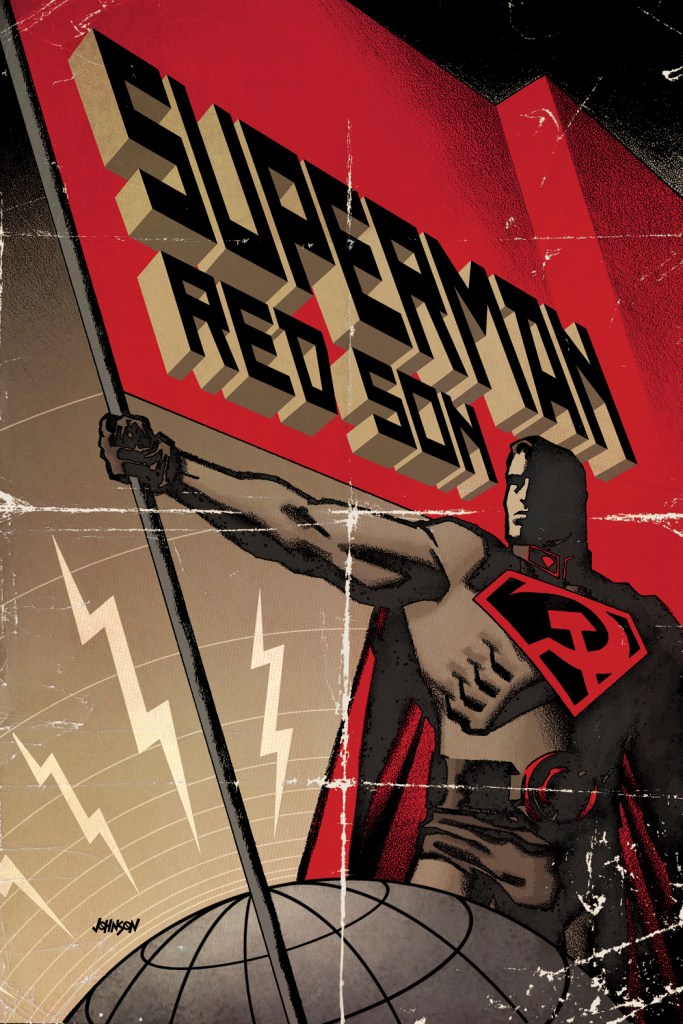
    2493286-Superman_RedSon_Hardback_cover_by_DevilpigSuperman: Red Son is a curious rendition of the Superman tale. It provides an alternate reality, where Superman lands on Earth a handful of hours earlier, ending up in a collective farm in Ukraine rather than Kansas during the reign of the USSR. The story aims to answer a simple, intriguing question: What if Superman had been raised in the Soviet Union? He grows to become Stalin’s golden son, spreading communism throughout the world and becoming the United State’s chief enemy. This plot is, of course, in direct contrast to what we know the “normal” Superman to be. However, it makes for extremely compelling reading, and at times is quite fun to notice how this alternative tale diverges from the orthodox rendition of the Man of Steel.

    DC is about to breathe life into their highly-anticipated cinematic universe. And whilst we know that it will draw inspiration from some interesting sources – for example, the new Batman is inspired by Frank Miller’s The Dark Knight Returns book – wouldn’t it be incredible if they chose to make a film adaptation of this particular Superman tale?

    Superman is seen as the colourful contrast to Batman’s monochromatic portrayal. He provides hope, serves as humanity’s beacon and supposedly guides us into a more enlightened future. Red Son, by contrast, still maintains Superman’s powerful moral compass whilst set against the backdrop of communism, an idea that is incredibly controversial in contemporary society.

    Yet Red Son makes for an enthralling story, one where there’s plenty action, suspense and ambiguously sketched characters that provide varied interpretations and thus depth. Perfect ingredients for great story-driven cinema, wouldn’t you say?

    The idea for a Red Son adaptation came when I was recently discussing the DC Cinematic Universe with a friend of mine, a veritable comic-book guru (incidentally, he introduced me to Red Son). We talked about how this film could end up being a slight departure from the overall arc of the DCCU, providing an alternative reality – perhaps even a completely standalone film separate from the DCCU. Sure, we need to get audiences acquainted with DC characters, but once that establishing is done, these deeper, darker story lines could be explored.

    Red Son is indeed controversial material. Communism seems to be a touchy subject in popcorn cinema, but I feel that a story of this caliber could transcend mere popular cinema and launch a niche in the superhero film obsession – one where there’s a deeper sense of story permeating the flashbang nature of these sci-fi-action-fantasy flicks. Red Son would seriously challenge DC’s prime competitor, Marvel. It would provide the battleground for the serious era of superhero films.

    In reality, could Red Son be made? Could we seriously see Ben Affleck as “Batmankoff”, Henry Cavill as a Russian Superman, Jessie Eisenberg as a positive Lex Luthor trying to fight the spread of communism that’s accelerated by Superman’s rise to power? In today’s world, realistically, no. DC is laser-focused on getting their Cinematic Universe started-up, and such a film would be a sidetrack, with too limited an audience appeal at this stage. Hopefully in the future, when we’ve exhausted the conventional story lines, producers will begin to delve into these fascinating conceptions of some of our most beloved heroes.

  • David S. Goyer on Screenwriting

    David S. Goyer is one of the most influential writers in film and television today. He’s responsible, along with Christopher Nolan, for reinvigorating the comic-book film adaptation scene with Batman Begins, and is the creator and writer for Da Vinci’s Demons (one of my favourite series on at the moment).

    Goyer is a brilliant screenwriter. His stories are compelling, action-packed and filled with enough gravitas to ensure dramatic tension befitting the nature of his iconic characters, whether it’s Batman, Leonardo da Vinci or Superman.

    In this lecture and interview with the British Academy of Film and Television, he talks about the craft, about his start as a young screenwriter, and his process on the Batman films, Man of Steel, Blade (for which he got his big break as a writer in Hollywood), Da Vinci’s Demons (and why writing for television is becoming more attractive for writers over films), and writing for video games.

    It’s an excellent video, very informative and entertaining. A must watch for anyone interested in the craft of screenwriting, films, comic books and television.


  • The Next Cinematic Universe: Batman, Comic-Con and Beyond

    superman-vs-batman-movie-2016

    Comic-Con San Diego is next month, and even though I’m not attending (since I live on the other side of the world…) the inner nerd in me is going mental with excitement. Warner Bros. and DC are expected to make the biggest announcement in superhero cinema history since the reveal of the Avengers film.

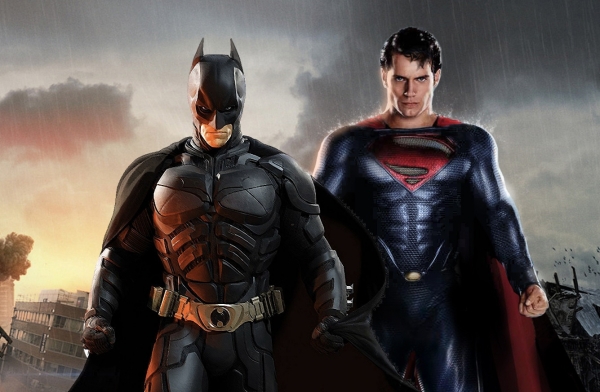
    Shooting for Batman v Superman: Dawn of Justice is currently underway, and there are rumors abound of a possible clip from what’s been shot that might be shown at the Warner Bros. panel. This would be the first time we see Superman, Ben Affleck’s Batman, and possibly Gal Gadot’s Wonder Woman sharing screen space.

    The other major rumoured reveal will be a staggering three-film-a-year announcement, stretching from 2016-2018, including the fabled Justice League ensemble film, as DC plays catch-up to Marvel’s spectacularly successful cinematic universe.

    For us cinema fans, this is welcome news. It means we’ll get more superhero movies released, and a wider variety of heroes, settings and story lines. For Marvel, it will finally be serious competition, and they will be forced to up their game as we enter Phase 3 of their Cinematic Universe, helmed by Lord of the Nerds Mr Joss Whedon.

    DC’s possible cinematic universe will not be the first time that a studio other than Marvel attempts to craft a successful, shared-story arc that binds multiple films, characters and creative talent. Fox has attempted this with the X-Men franchise to a large degree of success, and there’s talk of Sony expanding the Spider-Man world. However, whilst Marvel has split licensing agreements across various studios, only being able to craft their Cinematic Universe with Avengers heroes (and why we won’t see any X-Men or even Spidey show up in a MCU film), DC has the advantage of owning some heavyweight titles – Batman, Superman, Wonder Woman – that, if put together thoughtfully in a shared story world could be potentially amazing.

    What’s remarkable, if the rumour is true, is the incredibly tight time frame that DC plans to unleash this plethora of films chronicling the adventures of some beloved heroes and villains. They’re not doing a slow-burn build-up to an ensemble film. Batman v Superman, the next outing with our new Henry Cavill Superman, already has the three heavyweights sharing screen space. Dawn of Justice will undoubtedly build to the next possible film, Justice League. This is unlike Marvel’s process with Iron Man, Thor, and Captain America preceding Avengers. I guess Warner Bros. is feeling the heat, and needs to get their “DCCU” up to speed as soon as possible. I just hope they don’t rush things – the last thing we want is for the highly-anticipated Justice League to be a total let down.

    It will also be intriguing to see whether they choose to integrate their existing television shows into the new universe. Arrow and Flash will be sharing a common universe next season, and there’s the premiere of Gotham that could provide a back story to the events of the DCCU.

    Other rumoured films to round-out this other Cinematic Universe will be a standalone Aquaman film… and the film many have been waiting for for a long time: Wonder Woman. It is said that the Dawn of Justice release date was pushed back to 2016 to allow for script adjustments to accommodate a proper cinematic universe that would see this Wonder Woman film delve deeper into Diana Prince’s backstory and build-up to her famous super-guise. This, along with the Justice League ensemble feature are what I’m looking forward to most in the new DC Cinematic Universe.

    We’ll have to wait until San Diego Comic Con next month to truly find out what Warner Brothers and DC Comics have up their sleeves. One thing’s for sure: it will be super.


  • An interesting perspective on Superman

    Bill: As you know, l’m quite keen on comic books. Especially the ones about superheroes. I find the whole mythology surrounding superheroes fascinating. Take my favorite superhero, Superman. Not a great comic book. Not particularly well-drawn. But the mythology… The mythology is not only great, it’s unique.
    The Bride: [who still has a needle in her leg] How long does this shit take to go into effect?
    Bill: About two minutes, just long enough for me to finish my point. Now, a staple of the superhero mythology is, there’s the superhero and there’s the alter ego. Batman is actually Bruce Wayne, Spider-Man is actually Peter Parker. When that character wakes up in the morning, he’s Peter Parker. He has to put on a costume to become Spider-Man. And it is in that characteristic Superman stands alone. Superman didn’t become Superman. Superman was born Superman. When Superman wakes up in the morning, he’s Superman. His alter ego is Clark Kent. His outfit with the big red “S”, that’s the blanket he was wrapped in as a baby when the Kents found him. Those are his clothes. What Kent wears – the glasses, the business suit – that’s the costume. That’s the costume Superman wears to blend in with us. Clark Kent is how Superman views us. And what are the characteristics of Clark Kent. He’s weak… he’s unsure of himself… he’s a coward. Clark Kent is Superman’s critique on the whole human race. Sorta like Beatrix Kiddo and Mrs. Tommy Plimpton.

    Superman is arguably the most recognizable hero. This is one of my favourite monologues from Quentin Tarantino’s Kill Bill movies. It challenges the conventional notion that the superhero is a kind of apotheosis of mankind. It suggests that the mask is a facade that represents humanity’s cowardice, contrasting it with Superman’s alienness that distinguishes him from the rest of his super-brethren. Superman is inherently alien, yet his upbringing by humans instills in him a strong moral focus that guides his later adventures as guardian of our species. Here, we explore an idea of how the Man of Steel perceives the human race, contrary to what preconceived notions are of his übermensch-like conception.

    I’m curious to see how Zack Snyder and co. will continue to represent him in the ever-expanding DC Cinematic Universe.


  • Google, Design and the Age of Flat Unity

    materialdesign-goals-landingimage_large_mdpi

    A curious thing is happening in the world of digital design. Skeuomorphism, the art of translating real-world design cues into the virtual sphere (e.g. concepts like the “desktop”, “folders”, and, recently, faux-leather stitching in previous versions of Apple apps for iOS and OS X) has been shunned in favour of a flat, clean, colourful aesthetic that aims to convey a more honest-to-the-cyber-world user experience.

    This is a good thing. It means that designers are starting to push new thinking into the highly volatile world of user interface design. Android has been doing the “flat dance” for a while, and Apple has only recently joined the bandwagon with iOS 7, and its decision has indeed catalyzed much of the developer community still holding-back to be swept by the Apple-effect of cascading influence.

    Google just announced “Material Design”, a new design language set to rival iOS 7’s flat UI, and which aims to bring more user experience consistency to the highly-fragmented and popular Android OS. Android has long since faced the challenge of scaling with its rapid growth. It is the most popular mobile operating system by far, and its open source nature means that it is susceptible to modifications. Samsung and Amazon, for example, both re-skin the generic Android interface with their own variants. Amazon goes as far as calling their theme an “OS” – Fire OS.

    What does this mean for the end-consumer? Well, consumers are more concerned with hardware than software; fancy features like fingerprint scanning and more megapixels are what drive sales, after all. But design fragmentation means that the user experience of a particular app across various Android flavours is unsteady. A user that jumps from one Android phone to another may experience subtle design changes that make for slightly jarred experiences. Apple’s iOS is designed in-house by a tightly-integrated hardware and software team, so the hardware-to-software experience is quite consistent. Android, by contrast, is nurtured by Google and the Open Handset Alliance, but hardware companies like Samsung and Sony implement it as the soul that gives life to their hardware creations – the Galaxy range, the Xperia range, etc. Each manufacturer makes it seem like there are a multitude of operating systems out there that are kind-of linked, when in fact there’s just one powering all their devices: Android.

    What Google is doing with Material Design is a huge deal: they’re giving developers a comprehensive design guideline, from the ground-up, to ensure that their app designs, and by extension their user experience, remains consistent across the multitude of Android flavours out there.

    Material Design is just another step in this new Age of Flat Unity: utilising flat design elements to rapidly unify disparate experiences. By alluding to real-world experiences through the implementation of physics-based effects (like the Parallax effect in iOS 7) and nature-inspired animated cues (Material Design’s abstraction of natural effects), designers can skip skeuomorphism in favour of an experience more intrinsic of the digital age. Google describes Material Design as:

    “a unifying theory of a rationalized space and a system of motion.”


    Material Design will be rolled-out across Google’s services and platforms (Chrome OS and Android being the major players). The Verge has a good breakdown of everything you need to know about the new design language; check it out by clicking here.

    Material joins Microsoft’s Metro Design and Apple’s iOS 7-esque flatness; I’m really interested to try out Material Design-inspired interfaces, and welcome this as a great addition to the Age of Flat Design.