Life in Pixels

haud ignota loquor

  • An interesting perspective on Superman

    Bill: As you know, l’m quite keen on comic books. Especially the ones about superheroes. I find the whole mythology surrounding superheroes fascinating. Take my favorite superhero, Superman. Not a great comic book. Not particularly well-drawn. But the mythology… The mythology is not only great, it’s unique.
    The Bride: [who still has a needle in her leg] How long does this shit take to go into effect?
    Bill: About two minutes, just long enough for me to finish my point. Now, a staple of the superhero mythology is, there’s the superhero and there’s the alter ego. Batman is actually Bruce Wayne, Spider-Man is actually Peter Parker. When that character wakes up in the morning, he’s Peter Parker. He has to put on a costume to become Spider-Man. And it is in that characteristic Superman stands alone. Superman didn’t become Superman. Superman was born Superman. When Superman wakes up in the morning, he’s Superman. His alter ego is Clark Kent. His outfit with the big red “S”, that’s the blanket he was wrapped in as a baby when the Kents found him. Those are his clothes. What Kent wears – the glasses, the business suit – that’s the costume. That’s the costume Superman wears to blend in with us. Clark Kent is how Superman views us. And what are the characteristics of Clark Kent. He’s weak… he’s unsure of himself… he’s a coward. Clark Kent is Superman’s critique on the whole human race. Sorta like Beatrix Kiddo and Mrs. Tommy Plimpton.

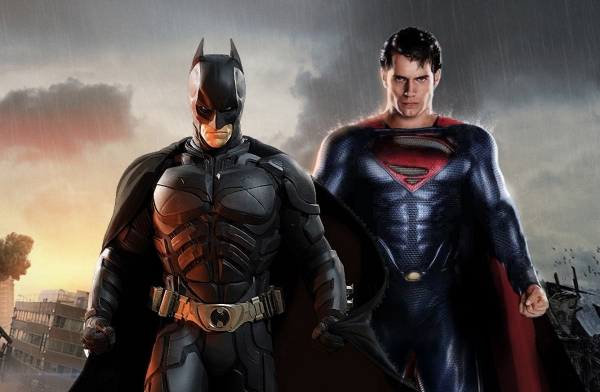
    Superman is arguably the most recognizable hero. This is one of my favourite monologues from Quentin Tarantino’s Kill Bill movies. It challenges the conventional notion that the superhero is a kind of apotheosis of mankind. It suggests that the mask is a facade that represents humanity’s cowardice, contrasting it with Superman’s alienness that distinguishes him from the rest of his super-brethren. Superman is inherently alien, yet his upbringing by humans instills in him a strong moral focus that guides his later adventures as guardian of our species. Here, we explore an idea of how the Man of Steel perceives the human race, contrary to what preconceived notions are of his übermensch-like conception.

    I’m curious to see how Zack Snyder and co. will continue to represent him in the ever-expanding DC Cinematic Universe.

  • Google, Design and the Age of Flat Unity

    materialdesign-goals-landingimage_large_mdpi

    A curious thing is happening in the world of digital design. Skeuomorphism, the art of translating real-world design cues into the virtual sphere (e.g. concepts like the “desktop”, “folders”, and, recently, faux-leather stitching in previous versions of Apple apps for iOS and OS X) has been shunned in favour of a flat, clean, colourful aesthetic that aims to convey a more honest-to-the-cyber-world user experience.

    This is a good thing. It means that designers are starting to push new thinking into the highly volatile world of user interface design. Android has been doing the “flat dance” for a while, and Apple has only recently joined the bandwagon with iOS 7, and its decision has indeed catalyzed much of the developer community still holding-back to be swept by the Apple-effect of cascading influence.

    Google just announced “Material Design”, a new design language set to rival iOS 7’s flat UI, and which aims to bring more user experience consistency to the highly-fragmented and popular Android OS. Android has long since faced the challenge of scaling with its rapid growth. It is the most popular mobile operating system by far, and its open source nature means that it is susceptible to modifications. Samsung and Amazon, for example, both re-skin the generic Android interface with their own variants. Amazon goes as far as calling their theme an “OS” – Fire OS.

    What does this mean for the end-consumer? Well, consumers are more concerned with hardware than software; fancy features like fingerprint scanning and more megapixels are what drive sales, after all. But design fragmentation means that the user experience of a particular app across various Android flavours is unsteady. A user that jumps from one Android phone to another may experience subtle design changes that make for slightly jarred experiences. Apple’s iOS is designed in-house by a tightly-integrated hardware and software team, so the hardware-to-software experience is quite consistent. Android, by contrast, is nurtured by Google and the Open Handset Alliance, but hardware companies like Samsung and Sony implement it as the soul that gives life to their hardware creations – the Galaxy range, the Xperia range, etc. Each manufacturer makes it seem like there are a multitude of operating systems out there that are kind-of linked, when in fact there’s just one powering all their devices: Android.

    What Google is doing with Material Design is a huge deal: they’re giving developers a comprehensive design guideline, from the ground-up, to ensure that their app designs, and by extension their user experience, remains consistent across the multitude of Android flavours out there.

    Material Design is just another step in this new Age of Flat Unity: utilising flat design elements to rapidly unify disparate experiences. By alluding to real-world experiences through the implementation of physics-based effects (like the Parallax effect in iOS 7) and nature-inspired animated cues (Material Design’s abstraction of natural effects), designers can skip skeuomorphism in favour of an experience more intrinsic of the digital age. Google describes Material Design as:

    “a unifying theory of a rationalized space and a system of motion.”


    Material Design will be rolled-out across Google’s services and platforms (Chrome OS and Android being the major players). The Verge has a good breakdown of everything you need to know about the new design language; check it out by clicking here.

    Material joins Microsoft’s Metro Design and Apple’s iOS 7-esque flatness; I’m really interested to try out Material Design-inspired interfaces, and welcome this as a great addition to the Age of Flat Design.

  • The First Rule of Being a Game of Thrones Fan is…

    Warning: Spoilers for Game of Thrones Season 4 ahead. Although, being a Game of Thrones-related post means inherent spoilers… anyway, proceed with caution.

    I recently started watching Game of Thrones – particularly out of intrigue and the pressure of wanting to find out what the hell it is that my friends are raving about each week – from their horrified recounts in the aftermath of that episode (“Rains of Castamere”, S3E09), to the constant skirting of certain book-reading watchers who are about to let slip an accidental spoiler.

    So I began watching this show. And suddenly transformed into a Westerosi myself. I knew vaguely what to expect in some of the series’ key episodes – I wasn’t as surprised by the Red Wedding as most uninitiated non-book-readers were, for example. But I still experienced that sense of shock and horror at such a gruesome visual, visceral rendition, where everything from the acting to the mis-en-scéne to the music ensnared my attention.

    And then Season 4 began. I was finally on-par with my Thronian friends. We were able to discuss our disgust at some favourite characters’ treatment, our glee at the deaths of other deeply-hated ones, and skirt the book-reading friends together. Which was fun. Season 4 was awesome, in true Game of Thrones quality-television style. Each episode carried the gravitas, beauty and action we’ve come to take for granted from this show. Until we got to Season Four, Episode Eight: The Mountain and the Viper.

    This is where I learnt my lesson. You see, being a GoT fan requires a special skill-set. You can’t mindlessly rush into the franchise and start picking your favourite characters. In fact, the first rule of Game of Thrones Fandom is You Do Not Have Favourite Characters. Because Mr George R.R. Martin is a sick bastard. He kills characters ruthlessly.

    This season, we were introduced to Oberyn Martell, the most badass character on television during those eleven-odd weeks that Season 4 was on-air. The entire Westerosi Fandom was rooting for him (well, us non-book-readers, at least). I was rooting for him. He was wronged by those horrible Lannisters. He was carrying a crimson vengeance. He was out to take names and kill some bad guys. This is the stuff epic stories are made of.

    And then he has to go and die. And not just die, but get totally obliterated in the monist gruesome, gut-wrenchingly shocking manner possible. Seriously, are they even allowed to show stuff like that on television??

    When “The Mountain and the Viper” ended with that sickening tracking show out of the fatal arena, and the credits began to roll, I could do nothing but just sit and stare at the screen in utter disbelief.

    That’s the raw power of a cult show like Game of Thrones. It draws its audience in, makes them invest their attention and emotions for particular characters, and then wrenches them away from you. It’s brilliant storytelling, really. This show (and its enigmatic author, Co-Executive Producer and sometimes-writer-of-episodes George R.R. Martin) has the guts to do stuff that other series can’t even dream of doing.

    And whilst we were made to feel bitter at the series’ creators and author, and take to social media to rage about what we witnessed, the season’s finale truly made up for it. Season 4 ended with a powerful set-up for the next ten episodes (a whole year of waiting! Say it isn’t so!), and an emphatically positive arc with some spectacularly beautiful moments (Stannis Baratheon aka “Stannis the Mannis” charging on the wildlings, and Daenerys’ and Arya’s story lines in particular).

    I’ve learned to distance myself from the characters, yet in doing so the irony is that I’ve become even more invested in the series; Martin has created a richly textured world of political intrigue, fierce feuds and elements of fantasy that make for compelling consumption in both words and visuals. Whilst I’m hesitant to read the sprawling books for want of keeping the mysterious aura of the television series, I can’t help but delve into the wiki pages and fan-made social media streams to immerse myself in the Thronian culture.

    So when Season Five comes a-knocking on my television time, I will indeed be better prepared, because, after all: the First Rule of Game of Thrones is You DO NOT Get Attached To Any Character or Being.
  • Hello (again)

    HELLO

    I’ve changed Pixelated Thinking’s web address.

    My new blog address is now www.rahuldowlath.net

    Why the change? Well, I kind of messed up my domain name transfer (it’s very complicated and boring and I won’t go into the details here). Anyway, I’ve decided to relinquish the .com address until it becomes available again with the registrar (which I hope will happen within the next year). But for now, and probably for a long time to come, I will be using www.rahuldowlath.net as the main access point to my blog, where I publish my thoughts on everything from science and technology to books, television and movies.

    If you subscribe to this blog via email, you don’t need to do anything.

    Thank you for supporting my blog and my writing. I have some fun posts lined up for you. You can follow me on Twitter to find out when the latest post is published: www.twitter.com/RahulDowlath.

  • In the midst of darkness…

    I dimly perceive that whilst everything around me is ever changing, ever dying, there is underlying all that change a living power that is changeless, that holds all together, that creates, dissolves, and re-creates. . . . in the midst of death life persists, in the midst of untruth truth persists, in the midst of darkness light persists.

    –Mahatma Gandhi