Life in Pixels

haud ignota loquor

  • Red Civilisation: Our Future among the Stars

    Maybe we’re on Mars because of the magnificent science that can be done there — the gates of the wonder world are opening in our time. Maybe we’re on Mars because we have to be, because there’s a deep nomadic impulse built into us by the evolutionary process — we come, after all, from hunter-gatherers, and for 99.9% of our tenure on Earth we’ve been wanderers. And the next place to wander to is Mars. But whatever the reason you’re on Mars is, I’m glad you’re there. And I wish I was with you.

    –Carl Sagan, Cosmos

    Contemplating a life on our neighbouring Red Planet has always fascinated me. In 2009, I presented a talk for my English class on colonizing Mars, and the research I gleaned from that exercise has fuelled my imagination ever since. After reading Carl Sagan’s excellent book Cosmos, and watching the brilliant reboot of the series hosted by one of my favourite scientists, Neil deGrasse Tyson, I have once again begun to think about what it would be like to build a society on Mars.

    Earth’s human population is increasing at an alarming rate. This is having significant spiralling effects on other aspects necessary to sustain life: the depletion of natural resources, subsequent environmental damage, and myriad health problems. In essence: our planet is being hotly contested for the sustenance of our precariously built civilisation.

    Thus we have two options: to seek out solutions to our current predicament (which is hastily being done by passionate people from diverse professions). And to seek out other possible places for habitation.

    The latter option is both absurdly outlandish and deeply compelling to those with an affinity for the creation of something new.

    Human beings have always been nomadic – we’ve always had the impulse to explore, to go beyond the horizon and discover things. It makes sense, then, that the quest for Mars has always been on our roadmap. It’s just the challenge of getting there that’s been the obstacle on our path. We’ve made significant steps, though: NASA’s Mars rovers, the most recent of which, Curiosity, is doing a sterling job of understanding Mars. The robots getting us closer to that ultimate goal of finally stepping on this mysterious red world…

    But when (and not “if”) we get there, what will our civilisation be like? We have the opportunity to start fresh. To reimagine our politics, to create a new culture – to develop, if you like, a “Society 2.0.” After a generation, we will be the Martians. And the shaping of anther planet will take our species from being shaped by the evolutionary forces of the Cosmos to being the shapers of worlds, the creators of entire planets, and disseminating our species further amongst the stars.

    It’s an exciting and immensely frightening prospect. Perhaps there will be friction between those who dwell on the “home planet” (Earth) and the new society developing on Mars. What will interplanetary economics be like? Could there be a possibility of trade between both planets? And, of course, management of resources has the potential to spark the fires of war. The surface area of Mars is equal to the entire landmass of Earth; if our population continues its exponential rise and we end up shunting a fraction of that off to another world, there will inevitably come a time when Mars itself will be facing similar challenges. And discoveries of precious resources could be another reason for planetary invasions and dissent between both worlds… Of course, issues of religion will also be a major factor: religion was, after all, a major component of historic expeditions to new worlds. Now, with the momentum of science and the advancement of technology, would we be able to transcend such things, or to effectively update our philosophies to encompass dual-world inhabitations?

    The contemplation of future societies amongst the stars is filled with rhetoric. But it is these questions that can spark further debate about the sociocultural aspects of inhabiting other worlds. Imagine travel brochures offering getaways to Olympus Mons… “experience fabulous Valles Marineris…” New architecture for a new world, new means of transport, living, working, entire professions rewritten for a red planet…

    I leave you with this message for Mars by Sagan:

    “The gates of the wonder world are opening in our time…” –Carl Sagan

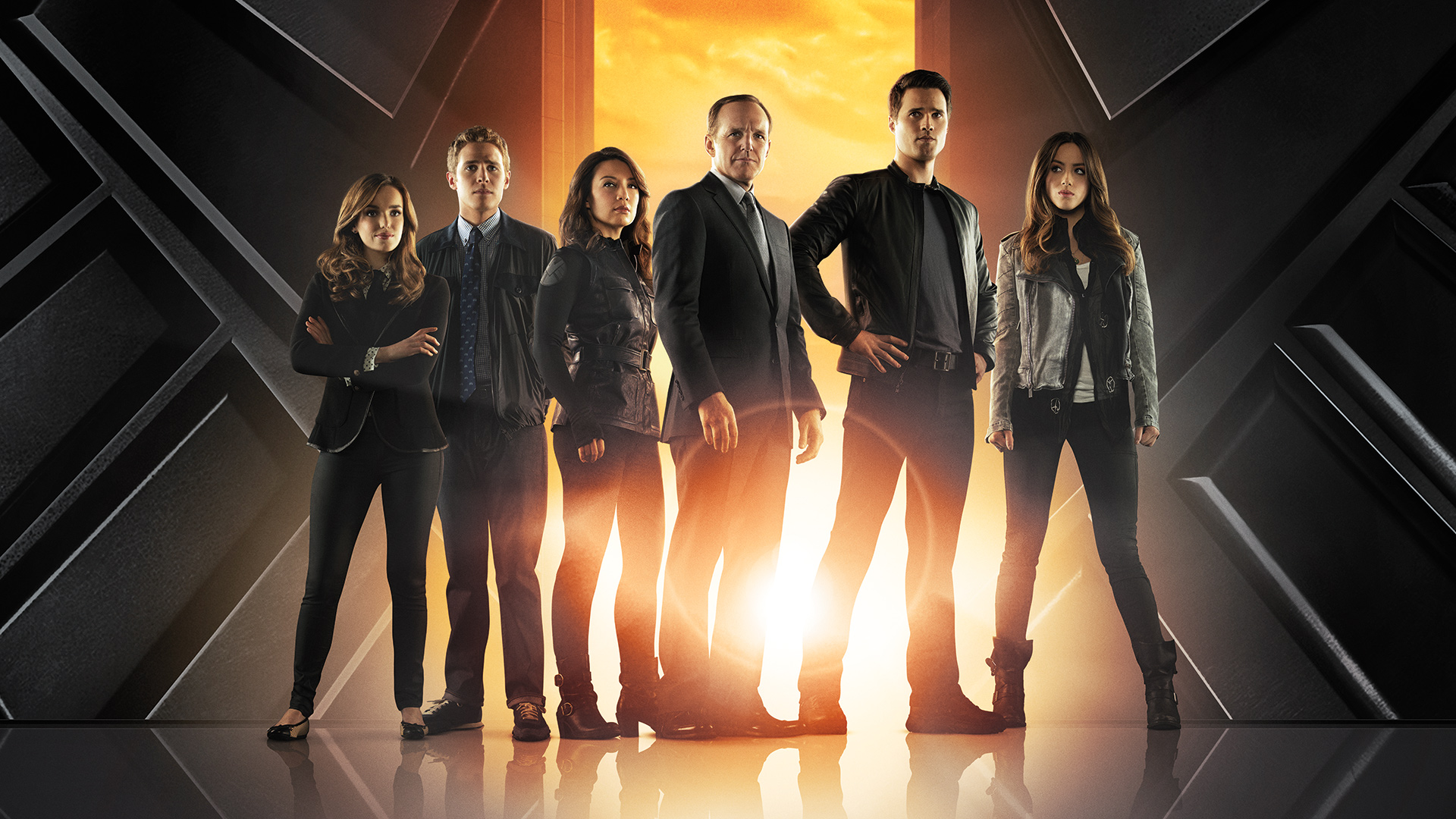
  • Can Agents of SHIELD stand on its own?

    MARVEL'S AGENTS OF S.H.I.E.L.D.

    I’ve written before about my impressions on the latest turns in Marvel’s Agents of S.H.I.E.L.D. series. It started off excruciatingly slow, with the mission-a-week plots becoming repetitive and boring. But now we all know that this was simply a ruse, a setup of layering in anticipation for the tentpole movie that is Captain America: The Winter Soldier.

    Agents of S.H.I.E.L.D. itself began following the aftermath of the “Battle of New York” which happened in The Avengers. So essentially, this series revolves around these major Marvel movies. My question, then, is can Agents of S.H.I.E.L.D. stand on its own? It took a major picture like The Winter Soldier to reignite the fires of the show, and the last few episodes of Season 1 are indeed explosive and riveting. But that’s mainly because they’re running off the momentum of the film’s events.

    Marvel has the opportunity to revolutionise the television aspect of comic book adaptations, similar to how they changed the game with their Cinematic Universe and the Avengers films. Could Agents of S.H.I.E.L.D. become a major Marvel property like the films it supports? Or is it merely relegated to the support-side, to maintaining fan interest in the studio between the major films?

    If Agents of S.H.I.E.L.D. continues this trajectory of just augmenting, and not significantly impacting, the Marvel Cinematic Universe, then I fear that the momentum of this show will surely decline to the point of non-existence, that the show will return to its Season 1 beginnings…

    Screenrant had an interesting post about the possibility of Season 2, and how the creators plan to close-off this current season:

    THR spoke with writers and executive producers Maurissa Tancharoen and Jed Whedon about the “growing pains” (Whedon’s words) of the series, the response from fans and critics and the plan going forward now that they are preparing to shoot the season finale. Are the planning for Agents of S.H.I.E.L.D. season 2?

    “Tancharoen: We have a board going right now. We just don’t have a season two yet. But we are planning on it and at the end of season one, we are tying a lot of things up as well as teeing things up for a possible season two.”

    If season one is the all fans see of Agents of S.H.I.E.L.D., will the finale wrap things up nicely to ensure the story feels complete?

    “Whedon: No, you’d be so desperate to see another season and you’d be sad. It’ll definitely be a satisfying season finale but we definitely are teeing up stuff to come.”

    So, if they end up with a second season, there is great opportunity to really establish this show as a major player in the overall MCU. With Joss Whedon at the helm of Marvel’s Phase 2, and his involvement in the creation of Agents of S.H.I.E.L.D. the TV show, we could potentially have a more tightly-integrated television and film experience. I, for one, look forward to seeing characters like Skye, Fitz and Simmons appearing in a major Marvel film. Conversely, Marvel Studios has the opportunity to cement Agents of S.H.I.E.L.D. as another impactful asset in their overall MCU. Let’s hope that #ItsAllConnected will continue into a season 2 of Agents of S.H.I.E.L.D. and Phase 2 of the Marvel movies.

  • Thoughts on writing: planning long-format projects like novels

    So I have begun another novel project – what I like to term a “long-form writing endeavour” (primarily because it sounds fancy :P). This time around, I don’t want to fall into many of the traps that plagued my first attempt. I’ve been reading extensively on the art of story structure, pacing, character development and on the general craft of writing. Two authors whose books have been indispensable: Steven King (On Writing: A Memoir of the Craft) and Larry Brooks (Story Engineering: Mastering the six core competencies of successful writing).

    I actually began reading these books during the final few months of the previous writing project, and I’m hoping that the lessons I’ve gleaned from those books will help guide me on this next writerly journey.

    I thought I’d share a few things I’ve picked up along the way, especially at this phase of the project.

    Right now, I’m in the earliest stages of planning this thing. This is a rather delicate time for the project. Right now, it’s little more than an idea, so it needs nurturing to convert that wisp of thought into something more tangible. The problem with writing – especially with mammoth projects like novels – is that there isn’t anything to hold you up; there’s no structure like a formula into which you can plug in some variables, hit “Enter” and bam! an answer is churned out. No. With writing, the writer needs to first design that structure before even beginning the piece.

    What’s interesting with both King and Brooks is that they each have a unique take on how the writer should work; they each represent the two major groups of writers: the plotters and the pantsers. Plotters (Brooks) meticulously plan out the story, developing a coherent structure and definitive points, understanding almost all the variables of the story before a single word of the manuscript is actually written. In contrast, the pantsers (King) write “by the seat of their pants” (hence the name), writing as the words take them. Being the diplomatic person that I am, I think each has its merits. But I like order, I like structure, I like working from a framework. Before all this, before I learned about this distinction, I began my first few novel attempts without any structure. And now I think it’s time I did this in a method that will ensure my wisp of an idea can walk a more tangible path to its realisation as words in a manuscript.

    So I’m going with Larry Brooks’ methods as outlined in Story Engineering. It’s not meant to mechanise the art of writing, but rather to enhance it, and to ensure that I keep to this thing. By having a structured plan, I know what’s going on in the overall arc of the story, I know which characters are doing what, and there’s no need to invent arbitrary things that often are done out of need to detract from the task at hand (as with my previous project).

    At this stage, I’m working on a beat sheet. This is the basis for an outline. All my scenes are bulleted in a document in Scrivener, and from here I can have a birds-eye view of the whole story arc. I see my plot points and pinch points, and know exactly what my main character is doing. Plot points are the major events, the checkpoints along the hero’s journey; pinch points are the subtle reminders of the antagonistic force impeding his quest.

    This project is exciting for me for a few reasons. Firstly: it’s the first long-form project I’ve embarked upon since my previous work, which had me occupied since 2009 (with many false-starts and rewrites before I even got to that first draft). So it’s a nice, fresh start. The idea is exciting, too, and is vastly different from what I’ve done before. It’s new and refreshing and gives me some much-needed vitality to kickstart such a long-haul voyage. Secondly: I’m writing it in first-person present tense. I’ll probably write another post about this technique soon; it’s something that’s quite compelling, and which I admired in The Hunger Games. This means I’ll be exploring narrative writing from a vantage I haven’t done before… and then there is, of course, the fact that I’ll be doing this from a structure that will truly guide me along the way.

    I plan on writing a few posts chronicling my journey, delving into a few techniques of the “long-format writing endeavour.” For now, though, I leave you with this gem I like to think I coined a few years back:

    “The journey of 50 000 words begins with the prologue…”

    (Which I later found out to be incorrect; it’s more like, “the rewriting hell-mission of 50 000 words begins without plan…)
  • Ensō

    enso

    To the mind that is still, the whole universe surrenders.

    –Lao Tzu

    I admire the sagely writings of the Eastern prophets and thinkers – Lao Tzu, Confucius, Rumi; I believe that their ancient wisdom can help us navigate the complexity and clamour of our technologically driven world today.

    Whilst not a part of the aforementioned writers’ canon, there is a Zen concept that emerges from the meditative act of Japanese calligraphy: the beautiful, minimalist circles that are in themselves symbols of lucidity. It is called Ensō.

    Ensō is symbolic of staying in the present, detaching the mind from the body, where the body or spirit is free to create. It is, in a way, a record of the moment of pure creation.

    It is cyclic, it is honest, it is at once incredibly intricate and surprisingly simple, capturing the Moment in a single movement.

    This idea of the “moment” has always compelled me. Creative work is a difficult beast to tame, especially in this Age of Distraction. Being mindful, calming the mind, focussing on the pure act of just creating, is essential to being content, is essential in taming that seemingly unwieldy monster.

    I think Ensō is such a beautiful idea, it’s result so lucid, so pure and honest. It is a reminder to us busy souls of what it means to create and to centre oneself in this chaotic universe through the simple yet powerful act of conscious creation.

    Staying in the present, living in the moment and fading the world out so that it’s just you and the work to be created before yourself: this is Ensō.

  • What’s in the bag: the writer/architect/coder edition

    inthebag

    My life is made up of many facets – due, perhaps, to multiple interests that influence my daily living. In writing this post, I decided to distill those many interests into three main areas: writing, architecting, and coding. Those are my principle fields, the ones I choose to spend my time in contemplating things and creating things.

    I thought it’d be a fun exercise, both in practicing my vector drawing skills with Illustrator, and in collecting and thinking of the tools I use on a daily basis, to compile this post. These are items I depend on daily to get through my work; they are indispensable to who I am and the things I create.

    (I might add that my EarPods are a part of this mix, but didn’t make it to the final cut – maybe because I forget to carry them around with me sometimes).

    iosincolor

    Music

    Music is a big part of my life. My trusy old iPod classic has been a longtime companion, but since I’ve become hooked on SoundCloud, I’ve been using it less. So now it’s mostly relegated to staying in my car, where it powers my driving soundtrack. My iPhone (and sometimes iPad) is the streaming surrogate for my SoundCloud obsession lately.

    Writing

    I write a lot, and find that analogue writing is a great way to distill thoughts and slow things down. My latest Moleskine is the Star Wars “Darth Vadar” edition ruled book, with the inspiring words “Don’t Underestimate the Force” embossed on the cover. I mainly write with a fountain pen in it (a Parker Sonnet with Sheaffer Blue/Black ink, a gift in my final year at high school), but when on-the-go, my trusty Parker Jotter does the trick. I have a great affinity for the Jotter – it’s the only model I’ve ever used since I was in Grade 4, and I carry it with me wherever I go.

    Designing

    As a designer, I keep a simple sketchbook with me for those moments when I need to sketch something to make sense of it. I’m not the best drawer, but little diagrams often help resolve some of the most complex problems, from graphic design ideas to large-scale buildings.

    The Hub

    My MacBook Pro is central to everything. It’s the machine I use to edit video, animate logos, design everything from wayfinding assets to website graphics to architectural projects for university, to writing blogs, short stories, essays and even my attempts at various novels. Everything I do feeds into this wonderful, dare I say it – magical, machine. Having an iPad Air helps tremendously as a second screen to display concepts or PDFs with tutorials, books or even web pages I’m using for reference. This allows me to keep the MacBook’s screen devoted to the task at hand. I generally run OS X with three desktop spaces to lessen the clutter that can arise from having many windows open at once.

    I always maintain that it’s not the tools one uses, but how they use them, that should be important whenever art is concerned. But this setup is what makes me enjoy creating things, imagining things and bringing things to life. I’ll probably change many of these elements as the years go by, but for now I’m really happy with this workflow.