Blog

  • Thoughts on the iPhone 4S

    Apple yesterday announced the iPhone 4S, the next iteration of the powerful smartphone that inspired the mobile revolution. This is major news for the technological sphere, because after all, when Apple breathes, the world shakes in its wake. The original iPhone left many of its competitors stumbling, and fumbling to provide a significant challenger (of which, to date, I don’t really see anything worthy of taking on this titan).

    As with any Apple product announcement, the iPhone 4S was preceded by months of speculation. Rumours were abound about the possibility of an iPhone 5, and its failure to appear at yesterday’s media unveiling at Apple’s campus in Cupertino, California actually caused the company’s shares to plunge down over 5% – quite contra to what the usual reaction is to Apple announcements. Thousands of fans the world over were left feeling dejected at the seemingly modest update to the iPhone – but they fail to realise that there was no official iPhone 5 to be launched – merely speculation. On the other hand, the iPhone 4S provided many clues to the rumour-mill in the guise of case designs, part leaks and the usual “analyst speculation” and “sources familiar with its development”.

    So while the iPhone 4S looks almost exactly like its predecessor (the iPhone 4), I still believe that it provides a formidable threat to the competition. And the power of that threat is packed largely into a new and exceptionally futuristic tool called Siri. Some are even likening it to the Terminator series. It’s that good. Basically, Siri is an artificial intelligence that you can hold in the palm of your hand. Instead of the archaic and cumbersome speech that we often have to apply to voice-recognition software, Siri takes a natural approach to actually speaking back to you, and understanding natural human commands. Take a look at this video for a better understanding of what this technology can do:

    The crux of the iPhone 4S is certainly Siri. This technology reminds me a lot of the old science fiction stories of artificial intelligence – and what a coincidence that Apple launches it the same year that I did an English presentation on AI technology and the concept of the “Singularity”. Siri will pose a great threat to the competition: coupled with the power of the iPhone 4S’s A5 processor, the technology provides a natural feel to voice-driven navigation of a user interface. And as history has shown us countless times before, Apple excels at providing a product that has all parts – software and hardware – designed and built in-house. Samsung and the cloning competition do not have this advantage – they piggy-back on the Android OS, simply customizing it to fit their hardware, and churning out a new model with a confusing name like SG1245-S* (and usually appending a seemingly cool, generally “cosmic”-themed codename like Galaxy…).

    As with all Apple releases, there will be disappointments. Yes, I am a little saddened that there is no “iPhone 5” per se, but in actuality, the 4S is the iPhone 5 –it’s the next iPhone after the iPhone 4. Whilst it may look like the previous iPhone, we should take heed of the adage that “looks can be deceiving” – the 4S packs a considerable punch in its internals. The current design of the iPhone is beautiful – it makes the plastic and carbon-copy competition pale a sickly colour in comparison. Why would Apple want to change the aesthetics of their flagship mobile product a mere year and a bit after it was introduced? I do believe that we’ll see a visual change in the next iPhone, but for now, I am once again in awe at the work of One Infinite Loop.

    *Product name fictitious.


  • Let’s Talk iPhone

    Well, Apple has officially sent out invitations to the media for their scheduled media event next week, October 4th, at Town Hall in Cupertino, California (headquarters of the fruity tech company).

    The speculation around the interwebs is that the new iPhone could come in two variants – an iPhone 5, and an iPhone 4S. Whatever the result, we can be sure of one thing: Apple is set to innovate this high-profile competitive market once again. A few things we could expect from next week’s announcements:

    • iOS 5 availability – the next version of the software powering the stylish devices, initially announced earlier this year at WWDC ’11.
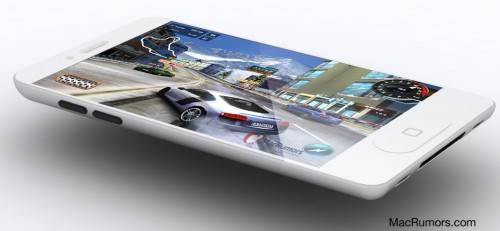
    • The “teardrop” form factor of the iPhone, ushering in a new era of industrial design for the most stylish smartphone on the market.
    • Assistant – a new, artificial intelligence tool for scheduling and organising appointments on your iPhone, augmented by new hardware and iOS5 improvements.
    • A faster processor – perhaps the A5 chip.
    • Improved Retina display, taking the brilliant resolution up a notch.

    Apple will seek to push the boundaries of the concept of the mobile phone, yet again causing their competition – Research in Motion’s BlackBerry, Samsung (and, by extension, the Android OS) and, of course, Nokia – to fumble in their trail-blazing wake.


  • Google+ is a Minus for Me

    When Google+ was announced for private beta, I was really excited. After all, I am a techno person, and using the latest technology is what I’m always after. Plus, I was intrigued to see what Google – that titan of the Internet – could bring to the social phenomenon.

    So, I managed to snag an invite to this supposed “exclusive” online club, and started trying out the service for myself. I was impressed: Google+ is clean, intuitive and offers all the essential tools today’s discerning social networker needs. Where Facebook had cluttered its interface with games, apps and a plethora of what I deem unnecessary gimmicks, Google+ was the exact antithesis.

    But then I started using the service less… and less… and less. I even managed to abstain from it for over a month. There’s just something about the service – perhaps it’s a lack of support for a native BlackBerry app, or the fact that it’s one social network too many.

    We’re living in a world that’s exceedingly crowded with options for having an online presence. I’m already on Twitter and Facebook, I instant message on BlackBerry Messenger, and frankly, there’s very limited space for yet another social network. The glitz of having a “prestigious” Google+ account has worn off (the service is now open to the public), and my limited time online means that I hardly have time to check my Google+ account. Plus, not all of my friends have migrated over to G+ – and the ones who do, I already have on Facebook or Twitter, so it’s almost unnecessary to contact them through G+.

    So Google+ is a minus for me – but only for now. I have faith that they’ll succeed; Google is a giant on the interwebs, and with the fiasco over at Facebook, they now have an opportunity to really shine. I’m just waiting on that native BlackBerry app to (perhaps) finally win me over to the Google way of things.

    What’s your take on Google+? Do you use it – and love it? Or do you think it’s just adding to the online clutter of social networks? Drop a line or two in the comments and let me know!


  • The Walker

    He walked through the deserted city. Phantoms wistfully disappeared around corners. The dead world; the dying world. Still, he trudged on, indifferent to the crumbling stone around him.

    The world as he had known it had died tragically. One final breath was all it took. One last, fiery gulp, an expulsion of orange inferno – and the Others, of course. This cataclysm had been triggered by their arrival on our soil, their masked goodwill an equivocation of their true intention.

    The dead city. And still he walked on, eyes focussed straight ahead, toward the murky twilight horizon. He had been walking for as long as he could remember; from the moment he re-opened his eyes to look at this eerie new planet.

    As he crunched gravel on the deserted street, passing crumpled cars with their engines still steaming from the shockwave, brief flashes of the world’s death rushed past his mind’s eye. The craft, hovering over the skyline. The sun, blotted-out by its stark size. The unbearable static soundwave that permeated the air.

    And the killing.

    They had engineered it all. The arrival of their ship was the final piece of their three-year veiled mission to our world. They had allowed us to discover who were are, what our existence meant in the vastness of the firmament, proved that we were not alone… and when our trusting nature – that very intrinsic of human attributes – overcame our minds, they struck.

    – A movement. Sudden. Sharp. His muscles tensed. The long evening shadows stretched across the tar. And then –

    A flash. Strident sound; reverberation against the hollow buildings. Then deafening silence.

    The creature lay in a heap on the ground. Its sallow, pale skin was flecked with a curious, dark turquoise liquid. Its large, insect-like eyes gazed lifelessly to the unreachable heavens. A metallic weapon lay just outside its spidery grasp. He stepped over the dead thing, swiftly hiding the smouldering pistol in his belt holster. Eyes looking blindly to his uncertain destination, a trail of death in his wake, the man walked on, a solitary figure in the vastness of an empty planet.

    ©2011 Rahul Dowlath. All rights reserved.


  • The Near-Future of Computing

    Microsoft recently announced the next version of Windows, called – yep, you guessed it: Windows 8. For those that aren’t in the techno-loop, this iteration follows Windows 7, which itself was a vast improvement over the disgrace that was Vista.

    So what I found interesting about this announcment is the Redmond Giant’s complete overhaul of the user interface, and by extension, the entire user experience of Windows. This is serious news for just about the majority of computer users – Windows runs on most personal, small-and-large business computers, and school computers.

    Windows 8’s UI is based on Microsoft’s visual concept called Metro. It’s a text-driven user experience that proffers a clean, intuitive interface that departs from Apple and Android’s icon-based interfaces. More precisely, it allows Microsoft to package Windows for tablet devices.

    When a giant like Microsoft makes a move in the wake of Apple’s trail-blazing innovation, one should definitely sit up and take notice. What these two Titans of technology do in the next few months will significantly impact the way we as a human race live, work and entertain ourselves.

    For starters (pardon the pun), Windows 8 takes leave of the traditional “desktop” interface. Gone is the Start bar that’s been on almost every version of Windows. Now, booting into your computer takes you to the Start screen, a tile-based interface that gives you access to your favourite applications and utilities (see picture at top). You can still page back to the “traditional” desktop interface from previous Windows (this looks exactly like Windows 7), but Microsoft is making it clear with this new interface: computing is moving in the direction of the touch era. Apple’s iPad and iOS are so far ahead of the competition, that companies like Microsoft – once industry leaders – are battling to keep up with One Infinite Loop’s pace. Thus, partnering with OEMs that can provide sufficient hardware, Microsoft is pinning its hopes on winning back a portion of Apple’s tablet marketshare, which is, if you didn’t already know, quite large.

    So computing is certainly moving away from the traditional “mouse and keyboard”. Touch interfaces, whether we like it or not, are here to stay, and from what these companies are doing, it’s clear that the technology can only get better (although, being an Apple fanboy, I still maintain that Apple’s work outshines the rest…).

    What are your opinions on this new era of computing? Share your thoughts in the comments section below.