Life in Pixels

haud ignota loquor

  • Is it a Tablet? Is it a Netbook? No, it’s a Surface

    Ah, Microsoft. Last to the music revolution party with the fateful Zune, and now last to the tablet party once again with Surface, Redmond’s reply to the post-PC computing revolution.

    As it was aptly captured by bloggers in the wake of the Microsoft special event on Monday evening, the software giant has struggled to find its place in this new world where the personal computer is no longer dominant, and devices such as the iPad are becoming more and more relevant for most users’ computing needs.

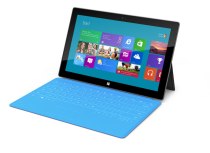
    From what I’ve seen, Surface is a bit of a confused gadget. Microsoft touts it as a tablet computer, however, there are a few glaring things that detract from this description:

    • One of the two Surface models (the high-end version) runs a full-version of Microsoft’s new operating system, Windows 8. It runs the desktop version. Now, whilst Windows 8 has been designed with tablet computers firmly in mind, the inclusion of the desktop version makes the Surface sound more like a netbook or laptop, instead of a tablet computer. Apple’s tablet offering, the iPad, by contrast runs a specific operating system, iOS, designed to integrate firmly with the app-centric model of Apple’s touch-devices. There’s clearly more focus from Cupertino then there seems to be from Microsoft.
    • Microsoft made a big deal during their presentation about the tack-on soft keyboard, which they call the Touch Cover. They claim (in an obvious quip at Apple’s iPad) that typing on this cover is “twice as efficient as typing on glass.” However, tablet computers are, traditionally, full-screen touch-based computers, with no reliance on a keyboard. If you need a keyboard, you’re better-off with a proper netbook, ultrabook or laptop. Furthermore, whilst the Touch Cover doubles as both a keyboard and a magnetic latch-on cover to protect the magnesium-made device, it’s a clear copy of Apple’s Smart Cover technology made for iPad, and would only work properly (and comfortably) on a flat surface – so forget trying to use it while relaxing on your couch.

    Microsoft’s Surface does have one thing going for it, though: beautiful design. Finally, Redmond has adopted a good sense of design, and the tablet does indeed look good. However, without any word about its pricing, definitive release date, and availability, it’s difficult to say more about the device. If they can successfully market it, Surface could pose as a formidable contender for iPad’s throne of dominance in the post-PC era, but given that Apple literally created the post-PC with iPad, that’s certainly going to be a tough challenge for Redmond to take on.


  • Why You Should Blog

    Well, because it’s fun, really.

    Blogging is a great hobby for anyone enthusiastic about writing. It allows you almost-instant content creation ability, and thus increases your creativity. It’s a great way to develop your writing skill, and gain feedback from a plethora of fellow bloggers and readers across the interwebs.

    I’ve been blogging for many years now, and in that time, having the knowledge that I have this facility out there in cyberspace – my blog – gives me the inspiration to constantly think of ideas for what to write next. Of course, using a strong blogging platform such as WordPress helps augment the enjoyment of the whole blogging experience.

    Blogging shouldn’t be seen as a stressful pursuit, but rather an enjoyable escape. I always encourage creatives to keep a blog. If anything, it can serve as a digital portfolio of your work, and a rapid-fire way to interact with like-minded people; people who care about the work you produce.

    So, go forth and blog. And if you have any questions about blogging, feel free to post them in the comments below; I’ll be glad to help.


  • Write Anywhere

    This is a great video that I found, about how you can write anywhere, anytime using a system of apps that works for you. A must-watch for any aspiring novelists out there! (Make sure to watch in full-screen to get all the details).


  • The Philosophy of Invention

    There is much written about philosophy that guides good design. And once, not too long ago, design and engineering were two separate entities that were only married at the end-product stage. But we live in an increasingly interconnected world, and there arises the need for a style of thinking that embodies the gestalt.

    According to the Oxford Dictionary of English (standard on Mac OS X, naturally)

    Gestalt: an organized whole that is perceived as more than the sum of its parts.

    Apple is a brilliant example of the mix between design and engineering that embodies this philosophy: the product is considered as a whole, where both its functionality and aesthetic is of prime importance. This, for me, is what good design is all about: not a simple, superficial outer-beauty, but a beauty that encompasses the whole, internally and externally.

    Thus, back to my original point: the philosophy of invention. Philosophy in design is concerned with the why: “why is something designed in that way? What does the design contribute to the functionality and aesthetic, and overall user-experience?”. Essentially, there’s incessant rhetoric etched throughout the design process.

    Engineering, on the other hand, is a vastly different world. It’s an efficient world, a place where the quickest, simplest route is always sourced first. However, I do feel that in an age where sensitivity to human-created objects is paramount, there needs to exist some sort of philosophy that guides future inventors and innovators.

    There needs to be a sense of thinking about the gestalt. By perceiving the challenge in its entirety, there exists the possibility of providing a solution that is beautifully mathematical, scientific, and aesthetic. Engineers must ask themselves not only “how does this work?” or, “how can I solve this problem?”, but also, “why?”. Why should this solution exist – “what is the purpose of this machine?”, for example.

    By understanding the purpose of our mechanical creations, we gain deeper understanding of their place in this world, and thus can better integrate solutions into our everyday life, and into a more sustainable, brighter future.


  • Wozniak on Siri

    “I start telling everyone I knew and speaking around the world about how this was the future of computing, speaking things in normal ways, feeling like you’re talking to a human.”

    –Steve Wozniak, co-founder of Apple, inc.

     Woz has constantly “needled” the company he once founded. Here, according to Boy Genius Report,  the Woz has lamented on how Apple has “dumbed-down” Siri, making it less cooler than it was before the Cupertino behemoth scooped-up the humble startup and turned it into the biggest selling-point of new iOS devices.

    From the BGR article:

    Wozniak said that he used to be able to get Siri to list prime numbers greater than 87, but when he asks Siri to do that now it thinks he’s talking about prime ribs.

    Wozniak was the engineering powerhouse behind early Apple computers such as the Apple II. He founded the company alongside his close friend Steve Jobs, who was able to brilliantly package and market Wozniak’s inventions and together, they revolutionized the personal computing industry.