Life in Pixels

haud ignota loquor

  • iPhone 5C: Apple’s Second Renaissance

    We all knew there would be an iPhone 5C. If the copious amounts of part leaks and even full design photos weren’t enough confirmation, then at least the fact that Apple’s significant challenge in facing-off the onslaught of cheaper, plastic Android models was a defining factor in creating just such a product.

    iPhone 5C (or is it spelt “iPhone 5c…?) is, in my opinion, a refreshing take on the mobile phone design that defined this generation’s idea of what a phone should be. It’s fun, vibrant and clearly aimed at a more youthful audience – factors that make it perfectly positioned to attack the Android and Windows Phone (in the guise of the Nokia Lumia range) charge. Its price point still leaves much to be desired – at one point, $199 to be exact – it overlaps with the low-end iPhone 5s model. This ambiguity, and the fact that it actually costs $549 unlocked, means that Apple’s lower-cost phone isn’t actually that cheaper, but it’s certainly the more economical option for those wanting an iPhone but not willing to shell out for the more premium incarnation.

    The Apple Renaissance

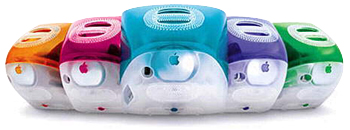
    imac5

    One of the turning points in Apple’s history was Steve Jobs’s return, and the creation of the plastic iMac, designed by famed Apple designer Jony Ive.

    This design breathed new life into the tired, beige-hued look of computing, and spawned many copies, even transcending the computing industry into other products like staplers and cooking utensils. It was iconic, and extremely successful. And it was made of plastic, a material that often takes a lot of flack for being perceived as “cheap” and environmentally un-friendly.

    That early iMac design marked a renaissance for Apple that was closely followed by the iPod and iBook. But soon Apple began to produce its distinct minimalist designs, forgoing plastic for sleek aluminium and glass. Which I, along with many others, have loved ever since. It is classy, stylish and durable – far more so than plastic.

    This design language has, however, become quite predictable. That is why I call the introduction of the iPhone 5c a second renaissance for the Cupertino giant. It adds a new take to the iPhone design, and alludes to that earlier time in Apple’s history when things were very uncertain (as they are right now, with the competition catching up and even surpassing them in many ways), and there was a definite need to shake things up. Then, and now, Apple chose to do this through the medium of design and not other strategies. Being a firm believer that through design they could build a rock-solid business strategy, Apple has hinged their hopes of regaining mobile dominance with this very product.

    As a second renaissance, the iPhone 5c represents a completely new framework of thinking at Apple: one that began with the flatter design of iOS 7 and which continues with the reintroduction of steel-reenforced polycarbonate iPhones that are colourful and in stark contrast to the more elegant and subtle iPhone 5S. The 5c now panders to new audiences, tries to hold on to audiences that are growing up, and adds a sense of fun to the product line in the same way that the iPod mini reinvigorated its product family. Apple’s new design language is going to be interesting to follow as it slowly unfolds across both its software and hardware, under the watchful eye of Sir Jony Ive.

    Just this week Apple moved ahead the process of getting the iPhone sold with China Mobile, the world’s largest phone carrier with over 700 million subscribers. And ardent followers of Apple news will know that the iPhone 5c has been in many ways designed to target such countries as China and India, the largest battlegrounds of Android dominance. If Apple can successfully infiltrate these fields with the iPhone 5c, then it will be proof indeed that mindful product design and meticulous attention and care to how a product is engineered and manufactured are indeed the ingredients to a winning product.

  • How long should a blog post be?

    Blogging for about six years now, I’ve often asked myself: how long should each post be? And as such, you’ll probably notice that Pixelated Thinking has a wide spectrum of post lengths, from 2000+ word essays, to simple quotes less than 100 words. This probably answers my question – that I don’t exactly know what the perfect blog post length is.

    But thinking over it, I’ve come to realise that, despite its rootedness in the fast-paced world of technology, blogging is fundamentally an art form, a means of writing and expressing one’s thoughts and ideas. And, as we’ve known from thousands of years of world literature, there is no fixed limit to how long a discourse should be. It can be as long as the 1.8 million word Sanskrit epic, the Mahabharata, or as short and lucid as Lao Tzu’s 81-verse Tao Te Ching. Both are incredibly powerful texts, presenting complex ideas and philosophies, yet they’re of two significantly different lengths. This in itself indicates how uncertain the idea of length is on a piece of writing.

    In school, we’re taught to conform to word counts – 200, 500, 2500 words maximum. Anything over, and you’ll lose marks. Whilst this is a good framework for forcing students to get straight to the point and thus structure their pieces rigidly, it can sometimes be quite limiting. And so, the world of blogging, a world where there’s hardly any rules, becomes a virtual playground for us lovers of the written word. But it can also be a curse, bringing the argument straight back to the classroom framework: the freedom to write as much as you like can start to make your work tiresome to read.

    The Internet age has definitely shortened our attention spans. Twitter’s 140 character limit is both a fun way of succinct expression, and a reconditioning tool to shorten our focus ability. And so I think that, in trying to answer this popular question of any blogger, one must look to what humans enjoy most: variety.

    Writing isn’t about numbers, it’s about expressing yourself. So instead of worrying about how long a piece is, rather focus on the content, and on the best way of converting your thoughts into words. Doing so, be mindful of your audience, of their retention rate on your blog, and also of your content spectrum: by shaking things up with a few long-form pieces amongst an array of quick-burst thoughts, you’ll have a lively blog that can generate its own discourse.

  • It’s been a while

    It seems like I’m writing this type of post too often, but I find it a nice way to get back into the flow of writing after a gruelling term filled with coursework and general university angst.

    So without further ado, and without attempting to make any promises about being regular on this blog (since I am, after all, majoring in Procrastination 101), here’s a small update on what I’ve got planned for the next few weeks, time permitting:

    • Reading: The House of Silk by Anthony Horowitz. I’ve been meaning to get into this book for over a year now, but many distractions have got in the way – from university, to other projects, to even other books (I’m looking at you, The Casual Vacancy and The Hunger Games). Horowitz is one of my all-time favourite writers; he, along with J.K. Rowling, really drew me in to reading insatiably, and it’s thanks to their words and love of books and the craft that I have been inspired to pursue this thing they call writing.
    • Writing: I’m still pushing through with the fabled manuscript. Yes, it does exist, and I’ve managed to break past 35 000 words. It’s still very slow-going, and being me, I’ve already got ideas for another book (unrelated to this one). No, I can’t reveal anything about it for a very long time. Hopefully you’ll find out about it soon.
    • More writing: I’ve become fascinated with gothic horror recently, and so I want to try my hand at writing a short story in this realm. Short story writing is always fun; maybe it’s because as humans we’re wired for instant-gratification, and so writing short-form pieces such as these blog posts and short stories are an affirmation-act for my writing life. Whatever it is, I am excited to get back to this type of writing, and also to explore a new piece of fiction other than the manuscript that has occupied much of my writerly life and thoughts recently.
    • Learning: I never stop learning. And so I’m hoping to continue my studies in server-side web programming and database design, in preparation for bigger things in the future.

    Oh, and there will be many films watched between all of the above, and I really hope to write about them on this blog. Here’s a short list of films I’m looking forward to:

    • Now You See Me
    • This is the End
    • Kick-Ass 2
    • Thor 2
    • Sin City: A Dame to Kill For
    • The Wolf of Wall Street
    • … and, of course, The Hunger Games: Catching Fire.

    All for now!

  • South Africa and Apple’s Plastic iPhone

    Plastic iPhone concept by MacRumours
    Renderings of what the iPhone 5C might look like (source: http://www.macrumors.com)

    Rumours have it that September 10th is the date for Apple to reveal their next iteration of the iPhone, dubbed the “iPhone 5S”. It logically follows the current 5, and is meant to be an incremental improvement – i.e., nothing drastic in its exterior design.

    But there’s another rumour, backed by copious part leaks and design drawings: talk of a cheaper iPhone, an iPhone made of plastic and not Apple’s signature glass and unibody aluminium. A phone they’re calling the iPhone 5C.

    The “c” is ambiguous (as was the case with the “S” suffix). Some say it could stand for “cheap”, others, that it’s “colours”, an indication that this phone will be available in various colour options, the first iPhone to break away from the traditional black or white options.

    This “lesser” of the two iPhones compels me to think of its implications in markets not yet transfixed by Apple’s mobile lure. The iPhone has, since its introduction, been considered a premium device. Its detailed construction, use of expensive materials and manufacturing processes, and the fact that it has the 1 Infinite Loop fruit printed on its back, makes it a device that dictates a hefty price tag. But with the plethora of cheaper, plastic Androids flooding the market, it seems like business sense for Apple to develop a product to get them back into the game and make themselves relevant in a mobile-centric world where these plastic droids are increasingly becoming a viable and economical alternative to the Apple way of things.

    As they did with the iPod, this venture into the cheaper alternative model for their flagship product could be a great way for Apple to reinvigorate the iPhone’s image. However, it’s a risky move: it threatens to potentially disrupt the iPhone’s brand as one of quality craftsmanship and style. Let’s face it: plastic has the reputation of being a “cheap” material.

    The rumours place this iPhone 5C (or whatever it’ll be called) as a replacement for the iPhone 5 when the iPhone 5S launches. Part leaks suggest that it will share many of the internals with the current iPhone 5, but will sport the new plastic shell. It’ll also be slightly bigger in form factor, but will retain the new screen size of the iPhone 5.

    For the South African market, the possibility of this new phone becomes rather interesting. I won’t go as far as to say that it will be the exceptionally cheap iPhone we’ve all wanted (the fact that it’s an Apple product means that it will still be marked-up significantly, especially with our wonderful local distributers who love to take advantage of this country’s fledgling tech market). But it will certainly prove a strong competitor to Samsung, who’ve been making waves here recently with a strong marketing presence.

    When BlackBerry launched in South Africa, it took the market by storm because it provided an economical way of staying connected. However, customers in South Africa are starting to awaken to the fact that BlackBerry is in a precarious state, and that their devices are struggling to keep up with  Android and iOS offerings. This faltering brand opens up the opportunity for Apple to get into the country’s mobile sphere and truly create a lasting image, and not just the superficial one it currently holds in the tiniest of market shares. What we really need, then, is for our networks to offer good data deals: it’s a big thing to ask of our marvellously overpriced operators, but combine a lower-cost iPhone with a solid data bundle, and I think Apple has the chance to make itself a stronger brand here, perhaps even as ubiquitous as BlackBerry managed.

    The iPhone 5C may not be “what Steve would’ve done”, but then again, Tim Cook has explicitly stated that the culture at Apple post-Jobs is not “What Would Steve Jobs Do”, but rather, how can they make the best products possible. Apple needs to cash in on significantly growing markets in order to make themselves relevant and to keep in a game that the Androids are already winning; South Africa represents a strong playing field for them to do so. Our smartphone market is growing daily, and couple that with a more technologically aware society, we’re one of the perfect mobile hotspots for these tech giants to invest in.

    Whatever may transpire come September 10th, I’m looking forward to Apple’s latest round of products, and will definitely be charting Apple’s inroads into our country continuously.

  • The Superhero Movie Obsession

    I’m a huge fan of superhero films. And recently, us fans of these particular films have been treated to a flurry of great (and terrible) adaptations of our favourite heroes. I guess my interest in this genre really began when I watched Batman Begins; it was the first superhero film where I saw a different side to the hero, the darker, the more complex, brooding hero that is the Dark Knight. Since then, Batman has become my favourite superhero (well, he was always kinda my favourite, I just rekindled interest in the DC character with Christopher Nolan’s brilliant rendition).

    But with the recent torrent of these films, it’s got me wondering: how long will Hollywood’s obsession with the superhero genre remain?

    Superhero films are the perfect money spinner. They have the perfect setups for high-octane action, in-your-face special effects, the easy ability to market them in Hollywood’s latest love affair – the 3D format – and their comic book roots make them the ideal merchandise spin-off tools that take the money beyond the movie house.

    But as the universe (and our good old friend Mr Newton) have proved to us, there’s a limit to everything. And I fear that, with the conclusion of Nolan’s Dark Knight saga, we’re fast approaching that point, that singularity for want of a geekier phrase.

    Let’s face it: the latest Iron Man was a flop. Weak story line (in fact, I saw a YouTube video that drew parallels between it and The Incredibles plot), over-the-top action sequences and a failed attempt at trying to make the franchise seem “serious and dark” like Nolan’s trilogy all contributed to my disappointment in this film. (I still maintain that the first Iron Man was the best on in this series).

    Man of Steel was a great approach at rejuvenating the ultimate superhero, the Übermensch himself. However, it too fell into the trap of including more flash than substance in its extended and dubious action sequences. Sure, I get it: superhero films need the action to justify their genre, but as Nolan displayed in his interpretation of the Dark Knight tale, you can achieve a subtle balance that makes a trilogy a brilliant one.

    Perhaps in questioning how long the superhero obsession will prevail, we should investigate why we revel in these films in the first place.

    The surface answer is obvious: to see our favourite comic book heroes on the big screen. But then there’s the deeper aspect: the escapism, the retreat to a world vastly different than our own, the offering of entering another dimension where these heroes exist, and where the problems of our own world can, just for a few hours, fade into the background.

    With Batman done, and now Superman entering the fold, and with Marvel’s heroes still chugging away at fighting crime and saving the world in generic CGI ways, I wonder if we’re reaching the point of these films becoming repetitive, mundane, and contrary to the mission they initially set out to achieve. I think that, if the studios are to continue their superhero fixation (and there’s no doubt they won’t – the box office takings certainly speak for themselves) then we need more innovative storylines, more engaging drama, and a return to the initial excitement that drew us to these films in the first place.