
Blog

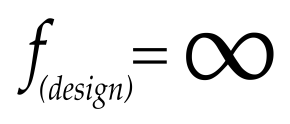
  • Design is a Function of Infinity

    lifeinpixels-instagram-02

    When does design end and use begin? Is there a definitive beginning and end to the process of design, and does design concern itself with the solving of problems, that is, working within a specific problem set, defining the end goals and working toward those within a closed system?

    No. Obviously not.

    Nothing in design is ever straightforward. Design is a function of infinity. It never begins, and it never ends. It exists as a fluid system where ideas come and go, where they are moulded by ideologies and philosophies, in the hope that the present iteration may benefit society in some way.

    As a function of infinity, there is no definitive solution that will solve all problems, or that will please everyone. And there is no designed solution that will be perfect, by the very fact that design is a human construct, and we are a notoriously imperfect species. Thus lies one of the age-old challenges of any design discipline: how can value be attached to something that is so vague, to a service that has no concrete end to it? The key would, most likely, be in attaching value to the process, that is, educating clients and endusers on the value in collaboration, in the techniques and tools required to sculpt a formless idea into the tangible object that exists in the material world.

    And at the other end of the spectrum, of course, is that feeling every designer has: the endless possibilities of a blank page, akin to the infinity of our Universe. Everything is possible, with the only constraint being the designer’s imagination (itself a function of infinity).

    Infinity itself looks flat and uninteresting. Looking up into the night sky is looking into infinity—distance is incomprehensible and therefore meaningless. The chamber into which the aircar emerged was anything but infinite, it was just very very very big, so big that it gave the impression of infinity far better than infinity itself.

    –Douglas Adams

  • Digital and Analog: A Tale of Two Mediums

    I watched Quentin Tarantino’s latest film, The Hateful Eight, recently. The big hype about this picture – apart from it being a Tarantino western, a surefire classic if ever there was one – is that he chose to film it in Ultra Panavision 70. This is a format that hasn’t been used in mainstream cinema since the 60s. In fact, Hatful Eight was filmed with the same lens used in classics like Ben Hur.

    Tarantino is one of the most prolific proponents of shooting on film. He believes that this traditional method is something that should be preserved, and that it adds an ineffable quality to the cinematic experience that is surely lacking from modern digital cinema.

    This argument – film vs. digital – is an age-old debate. It’s not unique to the realm of cinema, in fact. As a young architect, I have already faced this debate, first encountering it in my undergraduate years. Architecture is a field that is constantly facing the challenges of technological progress. On either end of the spectrum (construction and design) technological development poses fundamental issues that deeply affect the very core of the practice.

    The argument for an analog approach to creativity is that it brings one closer to the work. There is no denying that the connection between brain and hand is inextricably strong. So yes, when introducing a new stream of knowledge (in this case, the many aspects of architectural education) beginning with analog methods is critical. Most importantly, it gives the student a better sense of proportion, geometry and scale. These are aspects that are oft distorted if one were to begin in a virtual sphere.

    However, the paradox ensues when we face the fact that most architectural students are educated by teachers who were themselves taught in the older craft of analog production. This method, when one gets to the higher level, is anachronistic in a highly digital world. Digitally produced work is thus frowned upon; a seemingly easy-way-out approach to the creation of architecture. Yet in the “real world”, a digital production environment is critical to the bottom line – to staying relevant in a fast-paced and rapidly developing economy.

    Here’s the thing: the virtual world is just another type of canvas. In many cases, digital form making brings forth accelerated creativity as complex geometries are made possible. Proponents of the analog method will argue that digital work lacks the je ne sais qua of hand-produced work. I would rebut by saying that digital work can be just as expressive as its analog counterparts – it all comes down to the practitioner, to how the creator wields the tools available to him.

    At the end of watching Hateful Eight, it didn’t really matter to me that the movie was filmed in the Ultra Panavision 70 format. Yes, it looked beautiful. And the cinematography accented an already entertaining and gripping story. But what mattered most was the experience: I cared less for how it was made, and more about how entertained I was – the final goal of any cinema. Likewise, it matters not how the piece of architecture was conceptualised. What matters is that it conveys the right information, it describes the idea in the best way possible, and it ultimately enriches the viewer or occupant.


  • Our Urgent Need for Philosophy Today

    More so than ever, we live in a frenzied, unstable world. Between a fluctuating economy, continued global political instability, and a (mostly) bleak future presented to us by our modern literature, we are becoming restless souls drifting through existence. The meaning behind the work that we do on a daily basis is lost, creating an intellectually confused species.

    These issues have troubled me for some time, and I have thus immersed myself in a study of philosophy to better understand just what’s going on in our modern world. That complex, difficult to describe branch of knowledge that, whilst key to almost everything we do in our lives, has become relegated to the hallowed halls of universities and its proper application in the real world has become lost.

    I think that a study of philosophy can help guide us in navigating the turbulent waters of modern civilisation.

    Philosophy is a study of the nature of knowledge. It literally means the “love of wisdom,” and it is urgently needed today more so than ever. Because wisdom has so often been shunted to the side in favour of the bottom line, of feeding the capitalist machine and surging us ever forward to that elusive lifestyle we are presented with by the media. As a species, we are lacking wisdom, our thoughts becoming lost amidst the continuous chatter of social media.

    Thus, a study of philosophy can help us to develop a mindset of calm, of rationality and the ability to think about the big issues, and understand our role, our place, in the grand architecture of the Cosmos. More so than any other tool, a study of philosophical ideas can enable us to think about, and positively affect, a sociocultural landscape that has become wrought with instability and convoluted systems that simply create unnecessary stress.

    Even better, though, than simply studying a course in philosophy, is reading broadly from a range of philosophical ideas across a wide range of history, thinkers and systems, and then choosing the best ones to create your own basket of wisdom, a little intellectual arsenal with which you can combat the daily challenges.

    Embarking on a journey of philosophical study can be rather daunting. I’ve found one place on the electric internets (to borrow this humorous phrase from Bill Nye the Science Guy) that can help initiate the journey to discovering wisdom: The School of Life.

    Watch this video, and begin your journey today:


    And remember… as the beloved Laozi once wrote: “The journey of a thousand miles begins with a single step.” (Tao Te Ching, verse 64)


  • The Nature of Design

    Perhaps it is because design encompasses such a wide range of economic tiers — from the high-end ultra luxury to low-cost housing and solutions for disaster relief efforts —that we tend to become confused about its purpose. Thus we tend to fixate on its nature as an entity aligned with exclusivity, where it has an aura that is seemingly detached from the plight of the everyday. This is its aesthetic conception – its surface value – something that is far easier and neater to understand than the complex beast that it really is.

    It is unfortunate that our society sometimes perceives the vocation as such, because design is such an intrinsic part of what makes us human. It’s an inherent part of our evolutionary story; it’s a validation of our ability to have adapted as a species that has emerged triumphant from every challenge nature has thrown at us. In essence, design has played a significant role in getting us to where we are today: a highly evolved, intelligent, dominant species capable of astonishing feats. We were able to overcome these challenges through innovation: through using our intellect to design solutions, to streamline mundane tasks and thus free our minds to begin contemplating the deeper issues that began presenting themselves, and thus continuing this cycle of development. Design has brought us mobile phones, bridges, cities that claw at the skies, and eyes that see into the dawn of time.

    For me, design isn’t about what something looks like. Aesthetics form such a tiny part of the entire story. Design is about how something works. It’s about how a multitude of pieces have been intricately woven together to form a coherent whole. It’s about the collation and understanding of seemingly disparate ideas, of making unconventional connections and sifting through a multitude of thoughts to retrieve those tiny fragments that are the true gems, the ones that will assemble to provide a meaningful solution. It’s a messy, daunting, multifaceted pursuit. It’s much, much more than just the skin of an object.