Blog

  • “Code is a material” = “Total architecture”

    Listening to Figma CEO Dylan Field’s opening address at Config 2026, I was reminded of a philosophy I was introduced to during my Masters in Architecture.

    I keep rattling on about how we’re needlessly fixating on tools and technologies, which only exacerbates the existential crisis so many designers are feeling in this “Age of the Machines”. So it’s no surprise that the chatter right now surrounds the new tools they launched — and how AI fits into the mix.

    But I find it more interesting to read between the lines in the release notes. The existential crisis abounds because we’re fixating on the toolkit, rather than contemplating how we could bridge that technological layer with the underlying aspects of craft that have driven our creative agency since the beginning of human-driven creative expression.

    What really stood out to me was the notion Figma posits: that “code is a material.” That it’s another surface we can use to express our creativity. If we dig beneath the surface, I see an interesting thing emerging in the product design space that architecture has, to some extent, been grappling with for aeons already.

    Figma’s “code is material” maps to an older philosophy — “total architecture” from Ove Arup. Arup was a visionary engineer and founder of the world-renowned built environment consultancy bearing his name. He advocated for breaking down domain silos, integrating engineering, architecture and aesthetics in the spirit of co-creation, of working together towards a single goal: beautiful, user-centered solutions. Total design removes the boundaries, blending traditional roles into a single philosophy, potentially flipping the script, where engineering can be beautiful, and architecture could be technical.

    When we compartmentalise the priorities, we create division. But fundamentally we’re all working towards a singular purpose, just from different angles. The Canvas represents the perfect space where these two seemingly disparate worlds can meaningfully collide, and I’m so glad that Figma returned their focus to this space once more. And presented the vision of something that brings “total architecture” to life through the very act of making.

    In product design, just like in other multidisciplinary domains, we often delineate design and development as distinct silos — shaping belongs in one domain, and execution in another. But the reality is not that clean. Sometimes the form can be found in the execution, sometimes the technicalities can be surfaced on the canvas. When we reframe the idea of code as a material that we can shape, manipulate and use like any other creative matter (a line, surface, light, texture…) it suddenly opens a new perspective on the whole agentic discourse. Instead of mindless prompting, Figma is presenting a vision of how we can reclaim our creative agency, moving further and not just faster.

    I find it fascinating how Figma is attempting to bring this abstract, foreign, sometimes frightening concept closer to the realm of design by choosing to shift the thinking and framing of what code is. For a while during this burgeoning era of AI-assisted (assisted used lightly there) creation, the prompt box has been the primary interaction surface. A shortcut. A magic genie that just makes and makes and makes and becomes almost addictive, creating this infinite loop of co-dependance, at the expense of our individuality and design voice. Code was still seen as the “other”. The thing that sat next to design, rather than what it truly is — something intrinsically part of it.

    Code being a material speaks to the idea that at its core, design encompasses a wider realm than just what the thing looks like. Code as a material gives us another dimension to shape feeling and emotion. When we step outside the prompt box, when we consider that the muliticoloured lines of text actually are a design asset in their own right, and when we bring that thinking back to the design canvas, we come closer to that vision of “total architecture.” That notion might even be extended — because unlike the built environment, the digital landscape is boundless, the multidisciplinary playing field becoming increasingly more level.

    Of course, I’m not saying designers must become builders. That’s a dangerous slope to slide down (and something I want to tackle in another post). What I’m getting at is: instead of the traditional view that code is an implementation mechanism used to bring static mockups to life, if we consider it as a material, a design tool, we can embrace code as an additional surface to explore creative expression. Agentic AI has just made it a lot more accessible, and having it live on the design canvas further compresses that space between thought and reality.

    The existential quandary abounds, perhaps even more so now that code becomes another surface for us to play with. But thinking of it in this aspect gave me a newfound perspective on the evolving nature of the designer, and the tools and materials we use to shape our ideas.


  • Marched through that month

    I honestly can’t believe it’s already April. I was so certain I’d written a post last month, and was shocked to see that I hadn’t! The last few weeks have been a whirlwind. As the season’s shifting to warmer weather and (muuuch) longer days, I’ve been a little out of sync with time. Which is ironic, as I’m a major watch geek and should be on top of this kind of thing.

    Anyway, a major reason for blitzing through last month without stopping by Life in Pixels has been the new novel. I finally completed the first (rough) draft and managed to get over 35 000 words on the second, typed draft in Scrivener. Lots of fixing to be done, but I’m really excited about this one. I believe it has the bones, and with a spring clean on the manuscript I’m hoping to have a readable draft ready for beta testing in the next month or so.

    I’ve also been toiling away at my own personal design system. I’m super excited about this – albeit it’s been giving me sleepless nights and never-ending ideation spirals. It’s been over a year since delving into UX, and I’ve taken the time to now consolidate my work, my ideas, and my progress, and distilled it into something I’m truly proud and excited about. You’ll have to watch this space for the announcement, which should be imminent.

    With spring blowing a kaleidoscope of colour through the (since arriving, very gloomy) Netherlands, it’s given me a compelling reason to step away from my desk and enjoy the beauty outside. I’ve done a 20km roundtrip cycle to Haarlem (which was major progress on my part, since last time I failed miserably at cycling that route), and in general just enjoying the longer days and vibrancy of Amsterdam.

    I’ll be taking a much needed break from writing and designing at the end of this month for a week, and Anthony Horowitz’s latest novel (Marble Hall Murders) arrived on my Kindle just in time for me to jump into during my time off. I can’t wait.

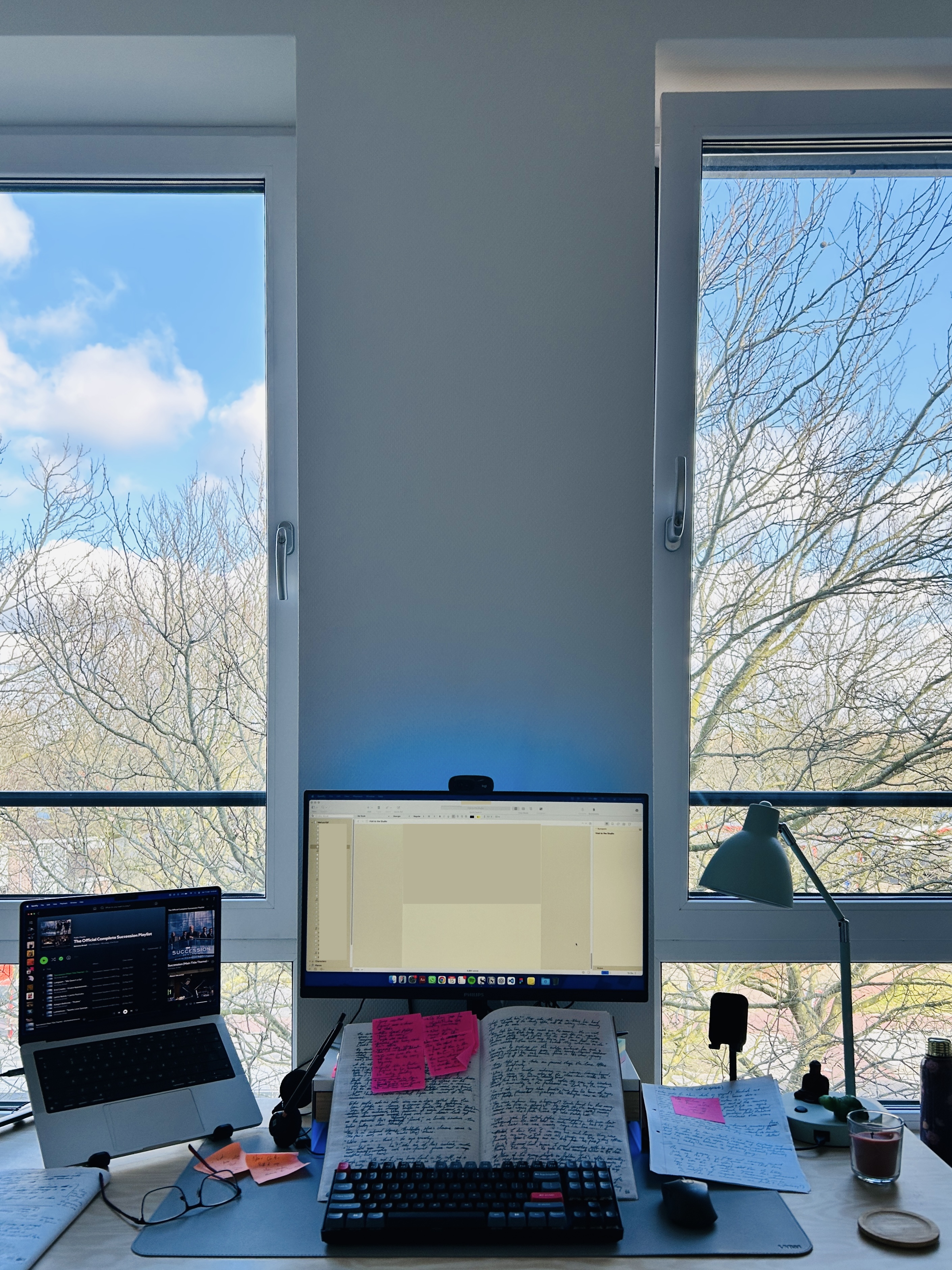
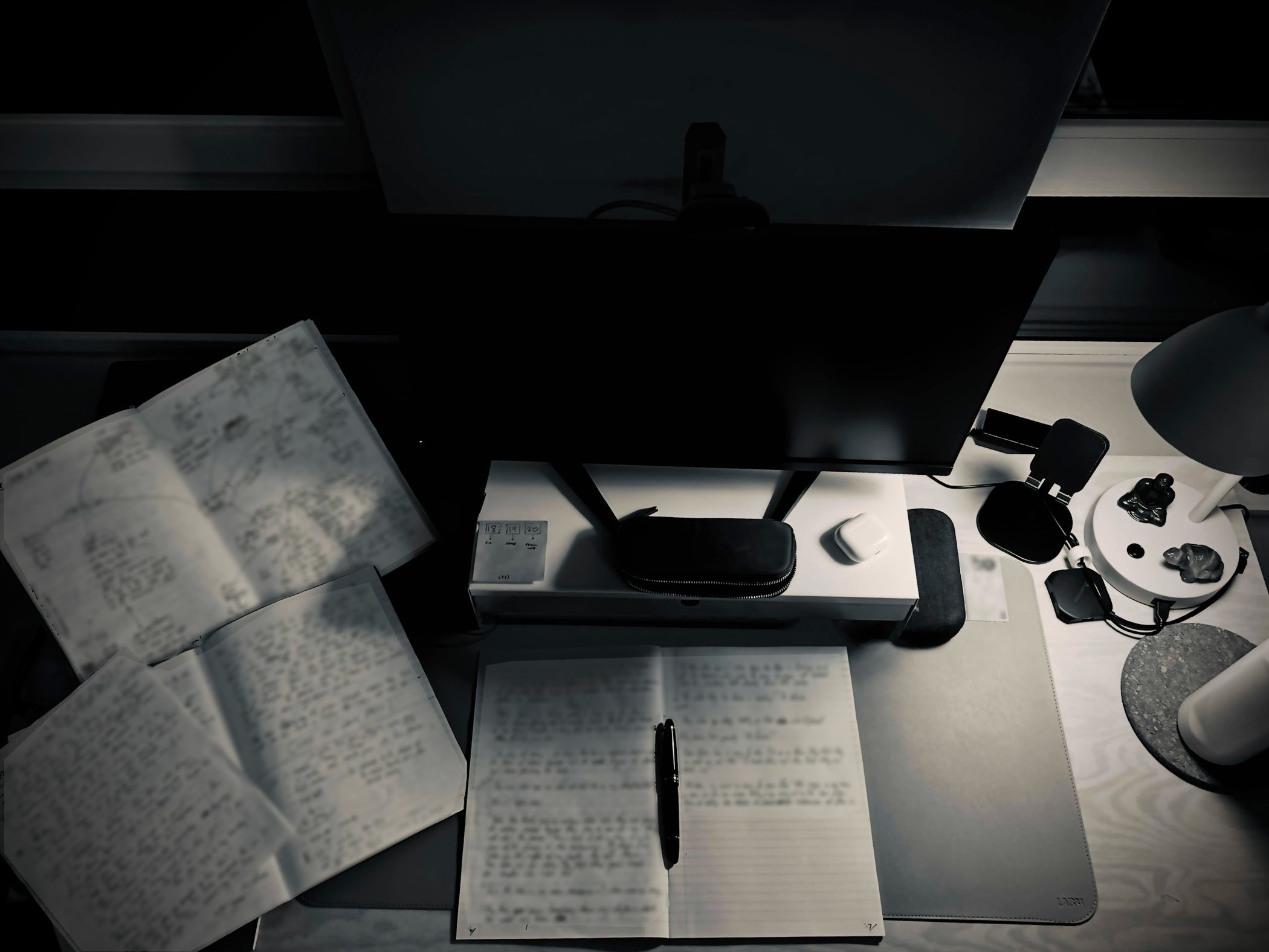
    Until next time, here’s a snippet of my daily view and the chaos of words and post-its that surround me on the daily.


  • A Trip to the Polderbaan – and a quick update on the new novel

    A brief respite from the gloomy winter weather offered a prime opportunity to take a cycle up to the famous Polderbaan runway at Schiphol Airport. This was perhaps my longest cycle yet, and as my confidence on two wheels continues to build, I admit I still have a ways to go in terms of my fitness level.

    It was quite exhilarating to see the big jets up close as they rotated right in front of me. Even better was being greeted by the roar of a 747-400 cargo liner as I arrived at the spotters area. The Queen of the Skies is my all-time favourite aircraft, and so it was quite fitting to see one as I made my first trek to this mecca of aviation.

    I promised another post in Feb, and hopefully this one delivers. I’ve been deep into completing the first draft of the new book. I set the ambitious goal of being done by the end of the shortest month in the year, and the way things are going, I think I might actually make it. This weekend alone I blasted through two chapters, and I’ve been tinkering with the “endgame” chapter (as I call it – the big reveal) on Scrivener itself. So working between two modes of writing keeps things exciting, at the least.

    As we move towards the third month, and approach the end of Q1, I am also starting to prepare for the design devleopment on MyDojo, and line things up for the actual development.

    Next time I drop by the blog, I’m hoping it’ll be a positive update on the first draft – perhaps even a title reveal. Let’s see.


  • It’s already February

    Already one month down, and I’m pleased with the progress of my “projects, projects, projects…“, which chug along at a decent pace.

    We’ve begun usability testing on some initial wireframes for the new MyDojo. I’m looking forward to delving into the user insights and starting to progress the designs towards high-fidelity mockups. The next big challenge will be to translate the (still in progress) system architecture into Flutter, which I’ll be using to develop the mobile app.

    I’ve been using Notion to keep track of the myriad items in the backlog, and it really does keep me sane – between managing my work life, my reading list, and my software dev efforts, it’s become a second brain for me.

    On the novel front, I’m making steady progress towards the first draft of the mystery novel I started writing at the beginning of last year. I’m about 23 out of 35 chapters done. Writing by hand is a nice form of detachment, but I really do hope I can decipher my handwriting when it comes to transferring the entire novel into Scrivener. The goal is to get this first draft on paper by end of this month, which is daunting in and of itself. It took me about 3 years to write Devanagari, which I still honestly haven’t finished (as I need to revise it into a coherent 2nd draft).

    But I’ve found writing this mystery novel to be a lot easier. It’s set in a place I know (Durban), the characters fascinate me (one in particular, a nasty guy who may or may not be the villain, and whom I can’t wait to introduce you all to 😉), and by writing the entire first draft by hand, I can be safe in the knowledge that the mere act of transference to Scrivener will be a leg-up with the 2nd draft.

    I’ve also started attending the Amsterdam UX meetups, which has been a great way to connect with the local UX community. Both talks (last month’s State of UX in NL and yesterday’s leadership session) were inspiring, and a great way to get out and talk shop with like-minded folk.

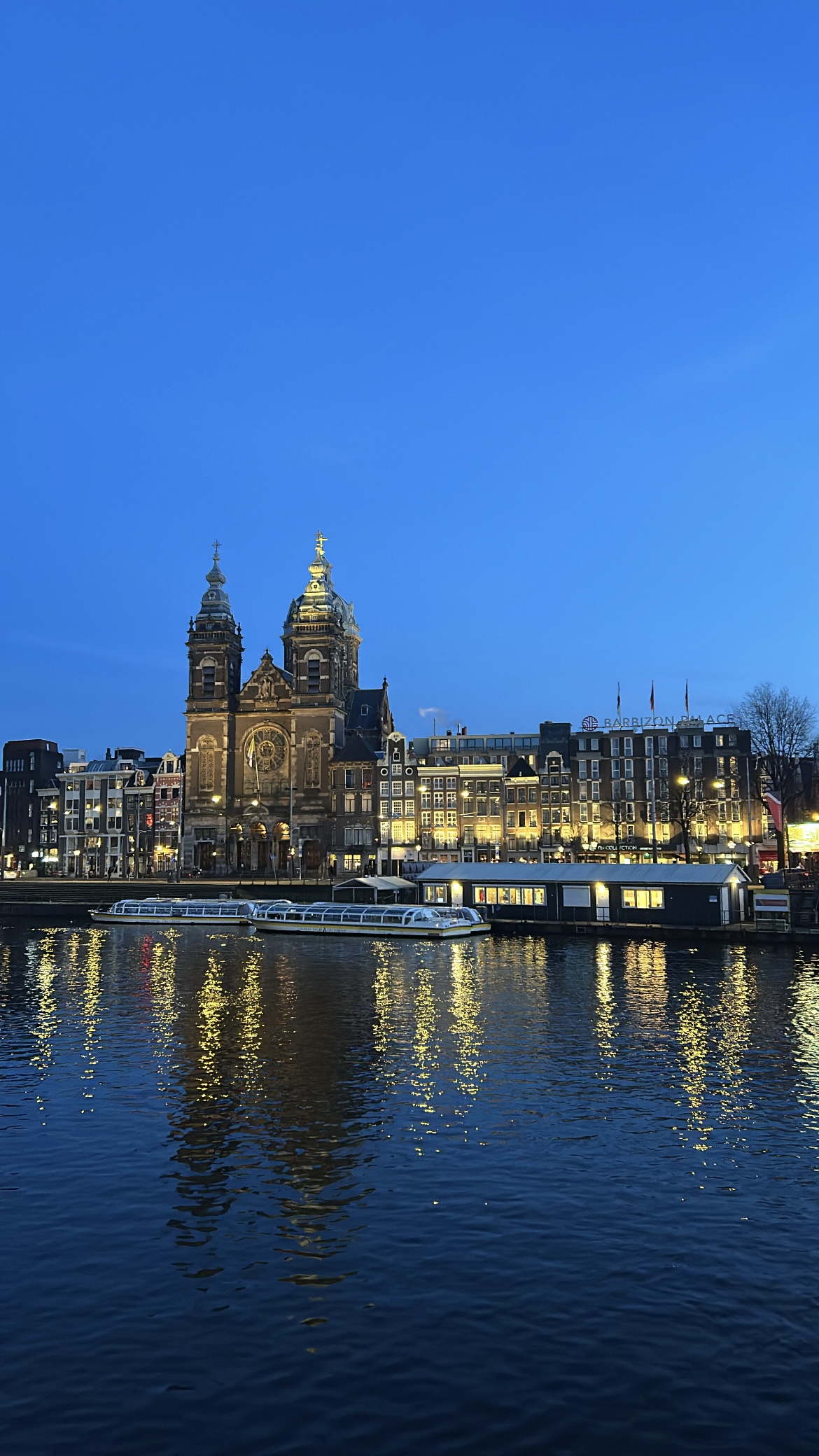
    With the weather marginally improving (slightly longer days, with more welcome sunshine), getting out to the Amsterdam UX meetups gives me a good excuse to snap pics of this beautiful city like the one above.

    Until next time (hopefully not only next month), it’s “all for now.”


  • Hello, Twenty Twenty Five

    What a chaotic but exciting few months it’s been. We lifted our entire lives and landed at the northern corner of Europe, in a small town near Amsterdam. It’s been tumultuous, learning how to self-checkout at the grocery store, ride a bike again (and survive multiple falls), and walk on the right-side of the street. But nothing short of adventurous (if a little freezing – Dutch winter is no joke).

    Now that the dust of moving has somewhat started to settle, and the promise of a fresh, brand-new year unfolds before us, I’m excited by a multitude of projects and things-to-finally-do now that the big life things have quietened down (for now):

    Return of the Mac

    After twelve glorious years with the good old 2012 MacBook Pro, and a somewhat hiatus from the macOS life, I’m super excited to return. Last Thursday, I fetched my new aluminium companion from Apple Amsterdam, and after hustling back amidst hail and rain, and three modes of transit (tram → train → bus), I booted up my new, silver M4 MacBook Pro. I can’t wait to work on some long-overdue projects with it (as always, watch this space… 😉)

    Planespotting

    The weather on this side of the world doesn’t seem to relent, and I believe we’re in for more weeks of snow, hail and biting winds. But there are momentary respites, during which I plan to take my Swapfiets out to the Polderbaan at Schiphol for some planespotting. AMS is an av-geek’s veritable Disneyland, and I hope to capture some shots for the ‘gram (if the weather holds up… otherwise, this particular adventure might have to wait until spring).

    Quality Kindle Time

    Last year, I managed to read 12 books. Granted, there was that part of the year where our lives were preoccupied with moving entire continents, so not much reading could be done. But this year, my goal is to do 14 books.

    I find reading the perfect medicine for calming the mind after a busy day. My Kindle has been a trusty companion since I joined the ebook life in August 2023, and since I had to leave my entire library of physical books back home in Durban, it’s become my portable library.

    Some of the books I want to get into this year include:

    • Mistborn by Brandon Sanderson
    • The Hallmarked Man by Robert Galbraith
    • Six Days in Bombay by Alka Joshi
    • Anansi Boys by Neil Gaiman
    • Marble Hall Murders by Anthony Horowitz

    Look out for my thoughts on them here at Life in Pixels.

    Projects, and Projects, and Projects…

    I wrote over a year ago about finishing my first novel’s first draft. Well, that book’s been marinating in the draft refrigerator since then – and in the meanwhile I started work on what might become a new trilogy. I’m over halfway through the first draft of the first book in that series. I’m writing it entirely with fountain pen (as much a means for creative freedom as it is a chance to get away from screens and return to the basics).

    The goal is to get that one into Scrivener and polished (to a point where I can finally tell you all more about it). And then return to the world of Devanagari. With the hype and hysteria around AI, I find myself increasingly compelled to get.it.done and get.it.out.there, because let’s just say, when it comes to this new technofad, I have… thoughts.

    Then there’s a few tech projects on the roster, one of them being a massive undertaking: a UX overhaul and complete redesign and rebuild of MyDojo. I’m very excited to get into it, moving to a new codebase based on Flutter and utilising more robust UX practices to really deliver a compelling and valuable experience. The scope is huge, the deadline is mid-year, and so we’ll have to see how that one can be sized to meet SKKSA’s 25th anniversary.

    Navigating the chaos

    There’s a lot planned for this year. Over the past few months I’ve grown increasingly fond of Notion, and this has become my second brain, helping me keep track of all these projects, ideas and research. I plan to showcase my Notion setup sometime soon.

    I say this at the end of every blog, and I’ll say it again, with hope that I do stick to my word this time: I intend to keep more active on Life in Pixels, and I have a few plans for this platform too.

    Keep an eye out on my Instagram (where I post more frequently), and subscribe to the blog to keep in touch.

    From chilly Amsterdam, it’s “all for now”.