Life in Pixels

haud ignota loquor

  • Happy New Year!

    I can’t believe it’s already 2012.

    As with most people, I feel that 2011 just whizzed past me; it’s almost as if it’s been a blur. But it was a great year – perhaps the best one so far for me. So here’s to more amazing times in 2012.

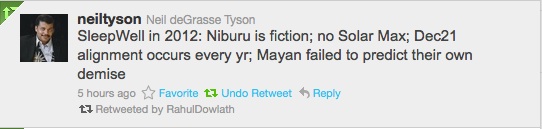
    I thought I’d share some geeky-fun tweets from Twitter as we entered the two-thousand and twelfth year of our civilisation. Enjoy.

    All the best for 2012!


  • So, You Want to Start Blogging?

    You’ve probably read a fair share of them. You’ve wondered, “hey! I can do this blogging thing too!” And yes, you can. In fact, anyone who knows how to use a computer (and, by extension, a mobile phone) can become a blogger. That’s the beauty of blogging; it empowers ordinary people with a platform on which to express, in their own, unique voice, to a global audience.

    I started blogging way back in 2007, and from then I’ve gone on to set up a number of blogs, mostly tech-focused. Today, I’ve decided to give back, in a sense, to the blogging community, with this simple post on the basics of blogging. It’s by no means a comprehensive list, and I will refer to additional resources at the end of this post, where you can continue your adventure into the blogging realms. (Click through to read more).

    (more…)


  • 2012 for BlackBerry: A New Hope?

    From CrackBerry.com: Rendering of the BlackBerry "Milan", a new BlackBerry that will run OS 10.

    Let’s face it: Research in Motion (RIM), the company behind the BlackBerry smartphones, floundered dramatically in 2011. What with the near-week-long international outage, a failure that is the PlayBook, and a series of hit-and-misses, there’s no doubt that its leadership will be wishing for a miracle to launch them back into the smartphone game.

    You must understand, BlackBerry was, not so long ago, the leader in the pre-smartphone era, when it came to email and instant messaging on-the-go. However, like Nokia, they did not see the phantom iPhone storm that changed the entire notion of the mobile phone.

    So, after the average attempt at modernizing the operating system that powers their phones in 2010 (with BlackBerry OS 6), RIM brought out OS 7 earlier this year, along with new phones that integrate the touch screen and physical keyboard that so defined these phones.

    Now, RIM is pinning their redemption hopes on a new, modern operating system they call BlackBerry 10 (formerly BBX). It’s based on the strengths of the PlayBook, and supposedly aims to bring the aging smartphone brand into the race with the likes of iPhone and Android.

    Whilst I lambast the BlackBerry on a daily basis (my own phone, a BlackBerry Bold 9700, crashes daily), and I continuously tout the brilliance of the iPhone, I do hope that Research in Motion will take heed of their mistakes in 2011, and launch courageously into the new year with the promise of a better start. If anything, it’ll force the market leaders (iPhone) to be on top of their game.

    RIM must realize that you can’t hope for success in this arena by simply sticking a touch screen onto an existing, old platform. You need to rethink the entire concept of the mobile phone in this age. That’s what Apple did with iPhone, and the success speaks for itself. BB10, then, should re-envision the BlackBerry product, not merely updating it to fit today’s standards. They need a better application store (App World), and they need to entice developers. They need to make the platform lucrative, and prove that they’ve got something that can hopefully withstand the might of the iPhone. Yes, BBM is a selling point (and a customer magnet). It forces most consumers to stick to the platform, as most of their friends are reachable in an intuitive manner. RIM has already begun to leverage this strength with BBM Connected Apps. But they need to do more; they need to have an holistic, complete developer toolkit similar to what Apple offers with Xcode and the iOS developer programme. Once developers realize that they can, in fact, work on this platform, there will be better content available with which users can interact with. And content, as we’ve seen with the iTunes and Apple App Store model, are what work best to entice consumers.

    However, things are already not looking too good: BlackBerries running the new OS 10 will only be available in the third quarter of 2012. So, in the meanwhile, we’ll have to remain content with the current, rather lackluster series of devices running OS 7. Don’t get me wrong; OS 7 is still a significant improvement over the previous software, but it remains no match for what the guys over at Apple, Android and Microsoft are up to with their respective mobile products.

    Looking forward to seeing how RIM will fare in 2012…


  • Thoughts on “Inheritance”

    So, I finally finished reading Christopher Paolini’s Inheritance. All 849 pages of it. I’ve followed the journey of protagonist Eragon for five years now, ever since I heard about the books from a classmate who delivered a book review talk for English in Grade 8. The story piqued my interest back then, and I’ve become engrossed in the richly-imagined world created by Paolini ever since.

    However, upon completing the fourth and final book of the Inheritance Cycle, I’m left with a bitter aftertaste. I won’t divulge any details (to avoid spoiling the story), but the last 100 or so pages just seemed to waffle, sputtering the story to a forced conclusion. It was quite obvious (and Paolini did mention it in the afterword) that there will be an inevitable return to the land of Alagäesia (and beyond…).

    These characters’ stories have yet to conclude. Whilst I would’ve liked to have a proper, full conclusion, providing closure to the cycle, I am somewhat excited at the prospect, no matter how small it might be, that there will be a Book 5.

    Overall, I do recommend Inheritance to all fans of the fantasy genre, and of the series.


  • Tablet Computing and the Post-PC Era: You Say You Want a Revolution?

    When Steve Jobs took to the stage at the beginning of 2010, he brilliantly illustrated the current conundrum of our computing landscape: on the screen behind him was a picture of an iPhone and a MacBook, separated by a significant gap. He posed a question to the audience: was there room, between these two well-established devices – the mobile phone and the laptop computer  – for another device? The answer, according to the technological visionary, was a resounding “yes!”

    The introduction of the original iPad in 2010 cased, as usual, a plethora of copies – the Samsung Galaxy Tab and BlackBerry Playbook being two significant attempts – and led to another paradox amongst consumers: the uncertainty about what exactly “tablet computing” was all about. For some, it served as a fancy new accessory, something to go along with their iPod or mobile phone. Others lambasted it as a larger, “squashed” iPod touch. And still, more were left confused: was there really a need for yet another technological gadget? Surly a netbook computer (a smaller, less-powerful but ultra-portable notebook computer) would be more than necessary; surely that was the obvious direction in mobile personal computing?

    So what, then , is the true purpose of the iPad? There must be some reason, seeing as it’s been heralded as one of the most significant advances in technology… I believe that in order to understand the iPad’s raison d’être, one needs to adopt a shift in the perception of the personal computer; one needs to re-think the very definition of where it stands, in today’s cloud-focussed era.

    In the early 2000s, Steve Jobs described the personal computer as a “hub” for your digital lifestyle: your photos, video and music would “live” on the computer, and other devices would plug-in to this system to sync with it. Think of the iPod + iTunes – where the iPod “fed-off” what was in your iTunes library. But the problem, as the technological river flowed on, was that it became quite untidy and rather tedious to plug various devices into the hub. Enter cloud computing: all your files stored in “the cloud” (actually, some discreet warehouse storing row upon row of servers), and you would access these files through that lovely invention called the Internet. In essence, you wouldn’t need a single computer for your own – you could sign in to any Internet-connected computer, retrieve a document, work on it, then sync it to the cloud, ready to be pulled down from another machine whenever you needed it.

    Within the context of the cloud fits the iPad. It becomes your mobile leech to the cloud. It’s intuitive interface and plethora of apps makes it a cinch to connect, edit, and sync. This is what Apple envisions the future of personal computing to be – the “post-PC” era. It is, perhaps, the last great legacy of Jobs: he gave us the PC, the digital lifestyle hub, and now: post-PC with the iPad.

    I write in terms of the iPad, seeing as it’s the first to bravely foray into this new territory. But in time, as has already happened, more copies will emerge: the fledgling (and perhaps already failing) BlackBerry Playbook, the Samsung Galaxy Tab, and other Android devices. They will also attempt to do what the iPad is doing: offer a seamless integration to the cloud.

    But whilst cloud-computing is foremost on the iPad’s agenda, it also enables users to create and consume dynamic content through innovative apps – it can transform at the tap of an icon into a piano, drum kit, guitar, paint canvas, sketchpad, word processor, database, and even a book. In Walter Isaacson’s brilliant biography, Steve Jobs, Jobs talks of wanting to transform the textbook industry next: offering excellent school textbooks for free on the iPad. Think about it: students would no longer need to lug backpacks crammed with heavy tomes from class-to-class (a chiropractor’s nightmare…). Instead, all they’d need is a sleek, thin, light iPad containing all their textbooks, annotations and notes. Intuitive, just the way Jobs liked things to be.

    In short: a tablet computer IS NOT a mobile phone, laptop computer, or personal computer. It represents our transition into what’s being lauded as the “post-PC” era – where cloud computing (storing and retrieving files, updating them, and synchronizing with all devices under your account) is emphasized through the user experience.

    We’re entering the next age of the digital experience. Be wary of which brand you trust – in choosing a cloud-computing partner (from Amazon’s SkyDrive to Microsoft’s Azure, or even Apple’s very own iCloud) and the devices that connect to that service. It becomes very similar to choosing your next computer: it needs to be secure, reliable, and meet the requirements of what you want to get out of it.