Life in Pixels

haud ignota loquor

  • WWDC 2013: It’s like the old times again

    I’m really excited about the imminent keynote to kick-off this year’s Apple Worldwide Developer’s Conference. It’s usually a time when the fruity company announces its latest and greatest – at one time, the next iPhone, but more importantly, its latest addition of OS X, and iOS. Whilst we Apple devout aren’t expecting a new iPad or iPhone announcement this year, Apple designer Jony Ive’s influence on the latest iOS – iOS 7 – is widely expected to make its debut.

    However, with so many conflicting reports, and the tight secrecy that’s for once befalling a recent Apple event, today’s keynote is actually anybody’s guess. Which is exactly as it was a few years ago, exactly how I remembered it, and exactly what drew me to religiously following these Apple events.

    It seems that in the past few Apple events, perhaps since the ones held around Steve Jobs’ death, Apple’s tightness on secrecy has loosened somewhat. In fact, before the iPhone 5 was announced in October last year, we knew most of its features. The official keynote event just became the formality for a product that was, for the most part, already announced through its copious part leaks.

    I guess that’s the beauty of a software-centric event: software can be a lot more tightly controlled, since it’s mainly developed and built in a centralised location, and not much can really be leaked. Sure, we’ve got a very grainy photo of a pre-alpha (i.e. really early build) of what the new iOS will look like. Which doesn’t say much, as it would’ve changed significantly in subsequent builds and internal tests.

    But there’s so much Apple can potentially talk about. They’ve been conspicuously silent in quarter 1 this year, whilst their competitors have been very busy: Samsung announced the Galaxy S4, a monster of a mobile device; Microsoft revealed the (lacklustre) Xbox One; even Google held its annual I/O conference and has been making waves with more details on its Project Glass. Whilst Apple mentioned moving to a yearly release cycle for OS X, it revealed nothing at the beginning of this year about 10.9, despite having announced 10.8 in the same timeframe last year, having it ready for the WWDC ’12 developer rush to test. Right now, however, 10.9 is still anyone’s guess, and time will only tell…

    Then there’s Mac hardware, something that’s widely expected to debut despite a lack of major part leaks (is Tim Cook finally “doubling-down” on secrecy like he promised almost a year ago?). But pro-level hardware is best targeted at pros, who will be in abundance at the Moscone West centre in San Francisco for the week-long conference. A new Mac Pro is imminent, and might get launched – significant for us consumers and prosumers, since whatever specs the big Mac gets will inevitably set the tone for the next generation of Macintosh hardware.

    I will be following the keynote with scrutiny as it unfolds, via the live blogs. You’ll be sure to get my verdict of whatever transpires soon after. This is one Apple event fans can be sure not to miss – there’s just too much drama surrounding it!

    A quick roundup of what’s rumoured to be announced:

    Most likely:

    • iOS 7: completely redesigned, with a “flatter” and “black and white-heavy” look, headed by design guru Jony Ive, the man who designed Apple’s iPod, iPhone, iPad, MacBooks, and a multitude of their other successes.
    • OS X 10.9: major speculation on what it’ll be called, it its going to be named after a big cat at all.
    • iRadio: an Apple-led streaming music service that’s long been rumoured.
    • New MacBooks: MacBooks with Retina all-round, perhaps?
    • Mac Pro: could the beast of a machine they pass for a computer finally get the major update it deserves…?

    Less likely:

    • New versions of iWork and iLife for Mac
    • Logic Pro X
    • Aperture X

    Least likely:

    • New iPhone (5S or 6?)
    • Low-cost iPhone
    • iPad 5
    • iPad mini with Retina display

    iOS hardware is a big enough market now for it to warrant its own, dedicated event. Historic precedent also indicates that, following iPhone release cycles up to 2012, these devices would be announced in the September-October timeframe along with the final build of iOS 7 perhaps.

  • The Next Frontier of Civilisation: Contemplating Mars

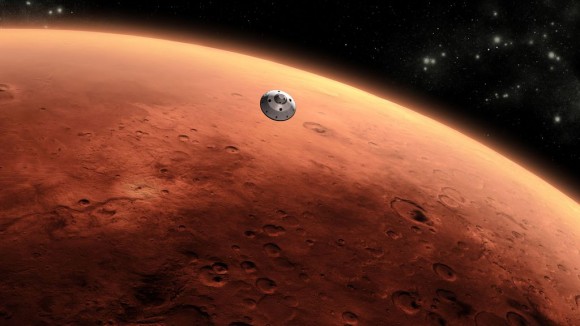
    Curiosity approaching the Martian surface. (credit: www.universetoday.com)
    Curiosity approaching the Martian surface. (credit: www.universetoday.com)

    It sounds like science fiction: a one-way trip to the Red Planet, with the chance to be one of the first humans to venture forth into the vastness of deep space and establish the first Martian colony. A project called Mars One is attempting to turn that wisp into reality, and already over 70 000 people have signed up. But this entire project draws a deeper level of contemplation: of our future as a civilisation.

    Renowned cosmologist Carl Sagan (one of my scientific heroes) wrote this in his bestselling novel Cosmos: 

    Human beings have a demonstrated talent for self-deception when their emotions are stirred, and there are few notions more stirring than the idea of a neighbouring planet inhabited by intelligent beings. […] If the planet ever is terraformed, it will be done by human beings whose permanent residence and planetary affiliation is Mars. The Martians will be us.

    –Carl Sagan, “Cosmos” (1980)

    Our future lies in the stars, on the dusty surface of a distant neighbour we’ve gazed at for centuries, dreamt of visiting, wrote extensively about and let our imaginations run wild upon its rocky, crimson surface. Mars has a special place in my heart. I’ve written about it fictionally, and gave a presentation on it in Grade 10. Even before that, I had whimsical dreams of making a movie called Mission to Mars. But now, the dream of visiting this planet is becoming a lot more real each day. Scientists, engineers, economists, medical specialists, writers are all coming together to imagine just how we could take our civilisation to the next frontier: space.

    The Problem Right Now

    Earth is a beautiful planet. It has just the perfect blend of ingredients to allow you and I to exist. However, in our advancement as a species, we’ve created a few challenges: globalisation, industrialisation, and the growth of our species has resulted in depleting natural resources and, effectively, a dying planet. Call it what you want – global warming, climate change – our impact has rendered our planet unfit, unhealthy. And whilst urbanists and others try to find solutions to our crises, I do believe that the time to consider a second planet is now.

    Yes, it sounds far-fetched. Because it is. But if we were to stop, and consider how rapidly our society has advanced in merely 150 years – from a society dreaming about soaring amongst the birds, to one that takes flight for granted, even complains about the Wi-Fi signal onboard. We’ve progressed. And I think, in that vain, contemplating the Red Planet is only natural; a logical progression from where we were, to where we are, to where we shall be.

    Contemplating Mars is an exciting solution to some of our great challenges.

    Why it’s compelling

    Thinking about establishing permanent residence on an entirely new planet is a truly exhilarating thing. Imagine Mars as a blank canvas: with an already intelligent society descending upon it, we have the opportunity to intelligently design what could be a “civilisation 2.0,” a new take on society, politics, and urban living.

    We could start society afresh: history has taught us of the social implications befalling the colonisation of distant lands. It usually leads to civil unrest, civil war, and the assertion of supremacy of one group upon a larger citizenship. These are issues we can avoid, for we now have the chance to strategically plan our new society, and to design all its constituent components. It’s a vision of utopia, yes – and here, literature warns us that utopian conceptions are prone to failure in the face of reality. But by designing everything – from the technology, to the social engineering – we have the opportunity to create something truly remarkable on an altogether fascinating planet. Whilst it may never be perfect, it will be as close to it as we could get.

    The science and technology are not quite there yet: much still needs to be done to get our ideas and their execution up to the scratch of the “greatly advanced technology” Sagan talks of needed to accomplish such things as full-scale planetary terraformation. But if we can get more people invested in the notion that going to Mars is a very real possibility, and that we can establish our presence there in a very tangible way, I think the momentum will begin to increase, propelling this dream into reality.

    The Mars One Project

    Mars One is interesting. At first, its ideas will enthral you (I invite you to visit their website and see for yourself the promises they make). However, their mission should not be considered the final word on this idea. Mars One is still very much a project in its infancy; after all, creating a new colony is extremely expensive. They talk of outsourcing the tech aspects to more qualified private companies, like SpaceX for the launch vehicle. But SpaceX themselves have still got a lot of work to do; they’ve only recently (last year) managed to launch an unmanned craft to the International Space Station. Whether the Mars One project will prevail remains to be seen; 70 000 people think so, but reality in this case seems to be the big door at the end of their dreams.

    This brings about another interesting node of thought: will the future of space travel, and thus, exploration, be a triumph of the private sector, or will government agencies continue to take us towards the stars? From the progress of pioneers like Elon Musk’s SpaceX, I think the days of the politically-sided government agency funding space are limited, and the age of commercial travel, and the innovation spawned from competition, will be one aspect that might get us to Mars quicker than bureaucratic methods.

    One thing’s for certain, however: those who will eventually be jettisoned to our neighbour may risk the very real possibility of not returning to Earth. Their’s will be a one-way journey to a new future and all its possibilities. Only the most committed souls, those so devout to the advancement of science and the progress of our race, will make that difficult psychological and social cut. But they’ll be heroes, and will get to live the dream many of us have harboured for years.

    In closing…

    I’m not saying that we should ditch efforts to solve the problems facing us here on Earth; that we should run away (literally) from the challenges of this age. Urbanisation, depleting fossil fuels, and increasing populations are issues that really need more attention. But if, for a moment, we were to step back, and consider advancing our species, propagating ourselves into the stars, and all the opportunities (and inherent challenges) that face us in that grander scheme of things, I truly think we can begin to see innovation on an awe-inspiring scale. We can begin to inspire generations to embrace the concept of moving beyond Earth, of standing on the shoulders of giants like Sagan, and Neil deGrasse Tyson, and those others so invested in humanity’s future. We can begin to see ourselves as not only the explorers, but the settlers too: the founders of a new era.

  • The Great Gatsby: The Jazz Age, brought to life

    Baz Luhrmann crafts a cinematic love letter to the “Roaring Twenties”, at the same time cleverly bridging the gap between that era and our own, in his latest film The Great Gatsby. A film tasked with bringing to celluloid (or, rather, digital projection) F. Scott Fitzgerald’s magnum opus will undoubtedly be faced with many challenges. How is it possible to capture the very essence of an epoch in the same way that Fitzgerald managed to, almost effortlessly, chronicle it in his Great American Novel?

    Lurhamnn’s film is perhaps an answer to that question.

    Opening with a beautiful invitation to the 1920s, the film’s photography suggest that of a dream. Lurhmann’s unconventional direction (evidenced in Romeo + Juliet) presents a take on the Gatsby tragedy that is at once both a stunning display of insight into the story, and a presentation that, by its very difference, incites one to journey with the director into exploring the mind of F. Scott Fitzgerald.

    The film is beautifully crafted, there’s no doubt. Each and every piece of it was carefully considered; everything, from the opening titles, to the set design, to the camerawork, even the actors matched to their respective characters, was pondered to great extent. That was evidenced in the film’s execution. Interspersing text with dreamy visuals, cameras weaving between the buildings of New York and the void between Gatsby and Daisy’s homes – “the Green Light at the end of the dock” – those were all very clever touches. Which brings me to the actual aspect of the “green light” concept.

    Studying this novel in my final year at high school, the metaphor of the “green light” was stressed to a great extent. It is, after all, an important concept in considering Gatsby’s unrelenting hope, his unyielding vision to attain his grand dream. However, I felt the whole concept a bit too stressed, too implied in Nick’s narration. What was excellent, though, was how Luhrmann played with this concept: opening the film with it, thus implying its importance from the get-go, using it in the most important scene in an interesting way – tracking the camera away from it as Gatsby’s vision slowly recedes – and fast-cutting to it in various scenes. Showing, not telling, is the key here.

    I thought the idea to portray the narrator, Nick Carraway, as a psychologically damaged individual recounting the events of that fateful summer an interesting decision. It allowed Lurhmann to transcend many of the beautifully crafted words from the novel into film, without losing its essence or forcing anything through implications and cumbersome dialogue. Nick, played by Toby Maguire, becomes the eyes through which we perceive the tragic tale of the great Jay Gatsby. Maguire’s portrayal of this complex character was executed brilliantly – I thought he conveyed the distinct traits of the written character. However, the constant voice-over narration did seem a bit overwhelming at times; it felt like the director was choosing to “tell, not show” us the events unfolding, or allow us to read the character’s emotions through the individual actors. All in all, though, Nick’s step from the book to film was superb, and those familar with the novel will be hard-pressed to not make some connection between Nick and Fitzgerald – especially in that final shot (I don’t want to give any spoilers here… go watch it to understand this!)

    Let’s talk about the music. The decision to use big-name rappers like Jay-Z, Kanye West, pop stars (sadcore singer Lana del Rey, rock extraordinare Jack White, even will.i.am and Fergie) was indeed controversial. “How could you possibly link these artists to the 1920s?!” it was decried from the high halls of Fitzgerald aficionados. Well, Mr Baz Lurhmann managed it – and managed it quite well. The way I interpreted this choice of soundtrack was linking it to the jazz music of Gatsby’s time. Jazz was to that era what our music – Hip-Hop, pop, electro-dance, alternative rock – is to us: a platform to chronicle the zeitgeist. By using contemporary music in a period film, Lurhmann inadvertently forged a bridge between these two times, essentially making Gatsby’s story relevant to us, indicating it to be a tale that could have happened just as much then as it could now. And also: it would draw in a younger crowd who would otherwise dismiss the opportunity to witness this film. Essentially: he makes this oft-complex story accessible to a generation perhaps struggling to get to grips with The Great Gatsby.

    The fast-paced camera work, at times soaring and then fast-cutting, might be a bit disconcerting. But here, I interpreted this as a conscious decision by Lurhmann: a means of implying the restlessness of the time, the juxtaposition of Nick’s home in the staid Mid-West with the boom of Wall Street and dynamism of a fledgling New York. Using those fast-cut shots and dissolving transition effects in the early scene at the Buchanan residence allowed us to glimpse snippets of dialog lifted straight from the novel, whilst absorbing the aura of trouble about to brew.

    Leonardo DiCaprio must be commended on his performance. I don’t think there’s anyone else who could play Jay Gatsby as well as I witnessed here. He brilliantly plays the quintessential charming, mysterious figure that inspires such speculation and masks an incredible ambition. This could very well by DiCaprio’s performance of his life. His Gatsby is carefully executed, tenuously wrung-out until that final explosion of anger and fear in the swelter of the Plaza room at the film’s main confrontation.

    Carey Mulligan’s Daisy was just as I’d imagined her from the book: beautiful yet superficial, a woman who represents Gatsby’s “unattainable dream”, and, by extension, the great American Dream – the chance of dreaming big, of having enormous hope; the romantic notion of believing in the dream and fighting for it, in this case, to the very bitter end. Joel Edgerton as Tom Buchanan was superb: he manifested the “foul dust [that] floated in the wake of [Gatsby’s] dreams.” His confrontation with Gatsby was perhaps my favourite scene between Tom and Gatsby, well played by both actors. I was also pleasantly surprised by Amitabh Bachchan’s Meyer Wolfsheim. Whilst only in a small segment, and clearly a ploy on the studios to attract the lucrative Asia-Pacific market, the Bollywood legend seemed very well suited to the shadowy role of this mafia boss.

    This adaptation of Gatsby is perhaps the most honest one yet. Yes, it’s a film that, aesthetically, is made very different to what many cinemagoers would expect. This is, after all, the daring Baz Luhrmann directing. However, I felt that the essence of the book was intricately carried over to the film. Many of the book’s major lines were not, as so often happens, truncated, or weirdly changed for some arcane cinematic purpose. Understandably  not everything will make it over to the film, but the choices Luhrmann made were good ones. The book’s ability to chronicle the zeitgeist of the Jazz Age was indeed mirrored in this film’s retelling of that, with the added touch of making it relevant to our time. It’s not something that can be achieved easily, and Luhrmann should be commended for that.

    Reviews are quite mixed on aggregator sites like Rotten Tomatoes, and understandably so. The book’s been around for over 80 years now, so there’s bound to be many people with highly opinionated ideas of how this story should be told on the big screen – if it should even be told at all. You could listen to them, and decide not to watch this film. Or, you could take the chance and experience something magical, and interpret for yourself what this film means for the legacy of Fitzgerald, and of this remarkable book. And maybe even just have a good old time enjoying a well-made, entertaining cinematic experience too.

    I’ve been waiting to watch this film for nearly two years now – ever since it was announced that Baz Luhrmann would be adapting this novel. I’d become familiar with Luhrmann’s style from Romeo + Juliet. His unique direction allows him to bring to life stories that are oft-plagued by the dense study of their eras. With Romeo + Juliet, he modernised the classic love story as a feud between two rival business families, adding guns and cars to the mix. And here, with Gatsby, the music, the visuals, the glamour, the lavishness and the decadent colours and sets transform the black-and-white words into a stunning portrayal of the classic Great American Novel. However, with the audacity to be different, to take existing, well-respected literature and just let yourself go, you’re undoubtedly setting yourself up for (very harsh) criticism. In that vain, I think this film won’t go down too well with some people. However, what can be gleaned from this is the willingness to accept another’s interpretation of this work. Literature by its very nature is open-ended, and up to the consumer of that literature to extract meaning. This film is just one man’s understanding of a very well written tale. And I thought he accomplished it with aplomb.

  • Why Science Fiction Matters

    Science fiction is a strange beast. After so many years of churning out brilliant writers who have pushed literary boundaries, it’s still somehow relegated to the fringes of mainstream media. In other words: it’s still seen as the “geeky thing”, the medium which those interested in the high-tech, science, engineering, anything technical affix themselves to. Yes, recent pop currents have popularised the “nerd culture” (hipsters, I’m looking at you) but when it comes to the real SF stuff – the Arthur C. Clarke, Isaac Asimov, Douglas Adams arenas – those pseudo-interested parties shy away and we return once again to the fringes of society where these greats still dwell.

    Why do I think Science Fiction is so important? It’s fictional science, after all – it’s all in the name; surely this can’t be elevated to the arena of those more “hard-hitting” genres such as historic fiction, biography, political drama, even thrillers?

    Well, why can’t it?

    Inherent in the name of this genre is the word science. What is science? It’s a tool for understanding. For predicting. For modelling theories and making sense and getting a grip on the vastness of our cosmos. The fiction part is where the fun happens – where the author’s imagination can let loose and the great fusion between whimsical fantasy and hard science converge to create a solid framework for seeing not just fantastical futuristic worlds, but ourselves, our present societies.

    Science Fiction provides a structure for us to understand the way we live today through the lens of a future world; whether that world is a hundred years away, or merely set in the next year – it’s inconsequential. The fictional representation of advanced scientific application to problem solving and dramatisation on one level inspires the great pursuit of science, and on a deeper level allows contemplation. And contemplation is a rare thing in today’s interconnected, rapid world.

    Added to this is the fundamental fact that SF is one of our best testing beds for new ideas, and thus becomes a great window into what the future world might look like. Because, after all, SF is what gets most people interested in the fields of science, engineering, the design of future worlds… those trail-blazers, innovators that are the true inventors of humanity’s future. If their minds came into contact with the words of Clarke or Asimov or Bradbury, then undoubtedly, somewhere, at some time, their work will be influenced by these and other titans of Science Fiction.

    I leave you with the words of Sir Arthur C. Clarke: “One of the biggest roles of science fiction is to prepare people to accept the future without pain and to encourage a flexibility of mind. Politicians should read science fiction, not westerns and detective stories.”