Life in Pixels

haud ignota loquor

  • Technology’s Disappearing Act: Apple Watch and the Next Big Tech Era

    A curious thing is happening in the technology sphere. As we crave mobile devices with larger screens, a consequence of the ever-deferring nature of content to the smartphone that our hands are seemingly glued to, the very nature of technology is becoming… invisible.

    As a long-time admirer and fan of Apple’s work, you might expect me to be raving about the new Apple Watch CEO Tim Cook unveiled this week. Here’s the thing, though: I’m still skeptical about this category. Apple has successfully redefined several categories in the past, but the problem with smartwatches – with wearables, in fact – is that we don’t exactly know what it is we want from them just yet. This product type is still largely in its infancy. And thus, can Apple truly change the game when its rules are still being debated?

    But with Apple Watch we see this idea of “technology’s disappearing act” come alive. Here is a device that, unlike its competitors (Samsung Gear and Moto 360), actually seeks to address the nature of a watch in this connected age. Apple hasn’t merely taken what works at one scale (the UX of iPhone) and resized it; rather, they’ve first decided to probe the sociocultural implications of what timekeeping means. This, in essence, is what design is all about: understanding a move, critically examining your position and its effect, before executing it.

    Our technology is increasingly becoming invisible, permeating almost every facet of our lives – not just for entertainment, but work, play, health, fitness. Thus moves like Apple Watch, the entire smartwatch category, wearable tech: this is an exercise in disrupting a logical path. It’s about re-imagining the way technology fuses with how humans have been living for centuries, because these devices are inherently intimate. They will be more connected to your physical being than any bit of tech before. Following a logical trajectory of design will only result in technology that is trying to solve problems that don’t actually exist: this is the conundrum I’ve been facing when thinking about this next paradigmatic shift in tech.

    Wearable technology, in order to justify its raison d’être, will need to tackle this very issue: how can it enhance human life, rather than try and solve unnecessary, non-existent problems? This is where I think Apple Watch excels. Whilst I am not entirely blown-away by its industrial design, I think that particular design decisions made by Jony Ive and his crew set this device apart. The digital crown, deep connection to the art of timekeeping through fun digital watch faces, and the tactic engine that gently pulses on one’s wrist, providing a distinctive tactile dimension, are elements that will significantly add to the user experience. I understand the digital crown as a new interaction model that will define the smartwatch, just as the click wheel defined iPod. And, of course, wearable tech is intimate; it’s personal. Watches are a reflection of one’s taste, style, and fashion sense. How can digital technology, ephemeral in nature, with an ability to rapidly skin new themes and change experiences through the dynamic essence of software, be used as a conduit to channel this idea of enabling personality to surface?

    The Apple Watch is pretty, and it tackles some serious issues that others have lacked to do so in favour of getting their products out first. But justification for its actual existence is what bothers me, and what I found lacking in Tim Cook’s delivery of his first significant product as CEO. The thing is, unlike iPod, iPhone and iPad before it, this device faces a critical challenge: that of actual necessity. Why would I want a tiny screen strapped to my wrist when a larger iPhone (which I have to carry with me anyway, since Apple Watch is highly dependent on this) can provide a less-frustrating experience when doing things like showing photos or sending messages? I think that where a device like this will truly excel is in the fitness category, and that itself is a fledgling arena.

    When Steve Jobs introduced iPad, he spent a significant amount of the keynote before the unveil to explain the iPad’s purpose: as a device to fit a gap between smartphones and notebooks; Apple’s response to the then-burgeoning “netbook” craze. But with Apple Watch, Tim Cook launched straight into it after an ode to his predecessor (“one more thing”). After the slick video intro, he returned to stage, arms held up in triumph. No explanation of the watch’s purpose, its reason – it felt like he was relieved to finally release his first defining product as new CEO. It’s a problem, I think, if we cannot understand the Apple Watch’s significance: what makes it unique and not just a response to the strong competition from Samsung, LG, Motorola and the others? What purpose does it serve that will define it, apart from its innovative user interface design and complexity of customization options?

    So, invisible tech…

    Today, software defines our mobile experience. When the hype around new hardware dies, it is the software that remains as the defining experiential aspect of a device. And this is where technology is beginning to shrink its physical appearance and maximize a more intimate, invisible force. A device that is as personal as a wearable offers the opportunity to craft products around experiences that augment daily life, where the physical object moves to the background, providing subtle feedback on various operations. Apple Watch’s tactile engine and digital crown are two elements that come to mind here.

    Wearables are going to be the next decade’s smartphone: as content gets bigger and more mobile, the opportunity for daily tasks to be augmented or replaced by digital variants will be great. It is in this sphere that wearable tech and the permeability of software into daily objects will enable technology to effectively disappear as it transcends from objects that exude “tech”, to more mundane guises that are powered by clever engineering and sleek industrial design.

  • Apple’s Style

    Apple has a major media event planned for September 9th. It’s being described as Tim Cook’s “big moment”, his defining touch on Apple – a company that has largely been defined by its enigmatic co-founder Steve Jobs. Whatever Cook and his team announces to the world will undeniably be the moment when his era truly points us to which direction Apple is headed. This will be the culmination of a series of steps taken since Cook ascended the ranks to CEO of one of the largest companies in the world: the “Designed by Apple in California” statement of identity, the emphasis on time, care and design at the opening of WWDC 2013, the plethora of iterative products in the form of iPhone 5, 5c, and iPad Air, and the moments of true departure – free offering of OS X, the revolutionary design of the new Mac Pro, an overhaul of the iWork and iLife suites.

    This got me to thinking about Apple’s “style”. What is it that separates them from the rest of the technorati? Each company out there today is doing phenomenal work, but Apple is the one company that changed the game more than once, with the desktop PC, the entire music industry, and this new age of the smartphone. They’ve done this with a sense of quiet surety, steadily riding the rough tides of underwhelming product deliveries when the world yearned for the “next great thing”. Apple has a style, and I don’t mean just an aesthetic quality – something that they’re renowned for – but a presence in the tech world that many of their competitors either lack, or try (mostly unsuccessfully) to imitate.

    It begins, I think, with their core philosophy. Apple is rooted in a design-first approach. Everything defers to intense research and development, in the creation of an experience rather than an end-product. It’s for this reason that they’re sometimes late to the party: case in point, wearables. Samsung undeniably beat them to it with the Galaxy Gear series, and whatever Apple announces on September 9th will be the culmination of an extensive design process where it is the experience, the sense of wonder and euphoria that its design team strives to imbue in the otherwise stark brushed metal and glass device, that will drift quietly to the foreground. Once the dust settles on the explosive announcement, once the media buzz quietens, it will be that experience – much like it is with iPhone and iPad, and how they ushered in a new way of interaction with our world –that will be the true character of the product, not necessarily the (iWatch?) itself.

    I’m not saying that Apple is without flaw. Like any mega-corporation, they will have their darker side. But it is in the zen-like philosophy of simplicity through design, of a quietness and stillness that they go about in an industry that is electrifying and hectic, that Tim Cook’s team distinguishes itself from the rest of the pack. And I can’t wait to see what they have in store come Sept. 9th.

  • Dawn of the Age of Spectacular Performance Capture

    RavP8uSbC0Ux
    Good science fiction stories offer one an opportunity to escape to fantastical worlds. Great science fiction goes a step further: it brings up philosophical issues, questions human nature and societal constructs. Dawn of the Planet of the Apes certainly falls into the latter category. It is a film deserving of the “blockbuster” status because it not only has a deeply compelling narrative, but immerses audiences in captivating performances, breathtaking scenery and masterful use of new cinematic technologies to bring a screenplay that’s rich with layered meanings to life.

    I haven’t watched the original “Planet of the Apes” films, so my review won’t be comparative. Instead, I approached this film as a continuation of “Rise”, and as one of the tentpole action films of mid-2014. “Dawn” is so good that I actually watched it twice – in both 2D and 3D.

    Director Matt Reeves does a sterling job of balancing intense, emotional scenes with Caesar and his brethren of apes, and explosive action sequences between apes and humans. This is the kind of pacing and delivery that so many sci-fi films of late are lacking – here’s hoping this film serves as a guide on how to make a good, well-rounded picture. Ape society, led by Caesar and now thriving 10 years after the events of “Rise”, comes across as a sort of parallel to (early) human society – one that is built on the foundations of fear-induced leadership to some extent. This becomes increasingly apparent as the film progresses and one of the two primary villains, Koba, wins over the apes. Parallels can again be drawn between Caesar and his son, Blue Eyes, and Malcolm and his son – this suggestion of similarity between both species brings heart to the story and adds an appreciated dimension to both Caesar and Malcolm, the two protagonists of their respective species.

    The villains of “Dawn” are well crafted. We can empathise with both Dreyfus (the human villain played by the always brilliant Gary Oldman) and Koba (the rogue ape that turns on Caesar). This is a mark of good screenwriting:  both ape and human villains have justifiable reasons for their respective actions, and if one were in their place, one could indeed see themselves acting similarly. Both parties are operating inherently on fear, and on trying to preserve their respective species. This is where the philosophical implications arise: can two dominant, intelligent species co-exist? This is explored to an extent, but along with the entire plot, sets up the answer to be determined in the planned sequel to be directed by Reeves with a release in July 2016.

    Now, intrinsic to the sci-fi genre is the use of high-end cinematic technology to create such immersive experiences. And in “Dawn”, the true star is the spectacular use of performance capture. Watch the video below to see how not only body motion, but intricate facial expressions were captured and superimposed onto the ape CG models.

    Andy Serkis is a veritable legend when it comes to performance capture, cementing his role as the leader in this realm with his breakout role as Gollum in Peter Jackson’s Lord of the Rings trilogy. In “Dawn”, he brings Caesar to life, creating the most compelling digital character I’ve ever seen. Watching this film in 3D with Dolby Atmos sound is an experience unlike any other; the Atmos soundscape draws you in to the auditory world, and the 3D used in this film is some of the best in an otherwise contentious aspect of modern blockbuster cinema. It felt like I was right there next to Caesar and Malcolm, right there in dystopian San Francisco witnessing the battle for the fittest species.

    Michael Giacchino adds to the film’s overall impression with a great musical score that is equal parts nostalgic – the high notes of energetic flutes mixed with thunderous brass and strings, and powerful timpani – and dynamic, creating a strong soundscape that accentuates the drama unfolding onscreen.

    The future of this rebooted Apes franchise should, in my opinion, be the arc of Caesar – thus, there should be a new human cast in the next film, so that we see how Caesar’s interactions with various humans affects his judgement as the battle for the Planet of the Apes reaches its high point. Having said that, it would still be nice to have James Franco return, at least briefly, and meet Caesar. That would be another poignant ape/human interaction that would add immense tension to the impending battle.

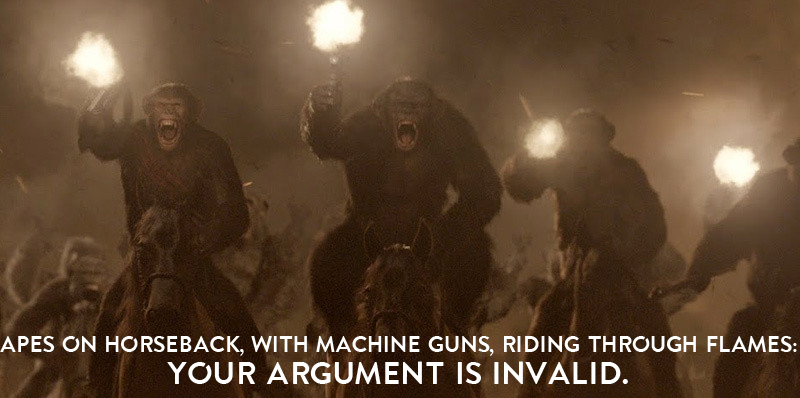
    Should you see this movie? Well, let me put it this way: apes on horseback, with machine guns, riding through flames. Your argument is invalid. Go and see this. Now.

  • Timeless Wisdom from Carl Sagan

    Human history can be viewed as a slowly dawning awareness that we are members of a larger group. Initially our loyalties were to ourselves and our immediate family, next, to bands of wandering hunter-gatherers, then to tribes, small settlements, city-states, nations. We have broadened the circle of those we love. We have now organized what are modestly described as super-powers, which include groups of people from divergent ethnic and cultural backgrounds working in some sense together — surely a humanizing and character building experience. If we are to survive, our loyalties must be broadened further, to include the whole human community, the entire planet Earth. Many of those who run the nations will find this idea unpleasant. They will fear the loss of power. We will hear much about treason and disloyalty. Rich nation-states will have to share their wealth with poor ones. But the choice, as H. G. Wells once said in a different context, is clearly the universe or nothing.

    And also:

    Every one of us is, in the cosmic perspective, precious. If a human disagrees with you, let him live. In a hundred billion galaxies, you will not find another.

    As long as unnecessary violence persists, can we truly call ourselves an evolved, intelligent species?

  • #AmWriting: 10 Soundtracks to Write To

    I’m currently working on a mammoth project – a (possible) 70 000+ word manuscript for an action/thriller novel that I’ve been planning for a few months now. It’s a scary thing to think about, and so writers often need something to help get them through the process. F. Scott Fitzgerald had his (ahem) indulgences, as did many other writers including Oscar Wilde, who even imbued his famous character Dorian Gray with some of his own habits. For me, well, there’s music.

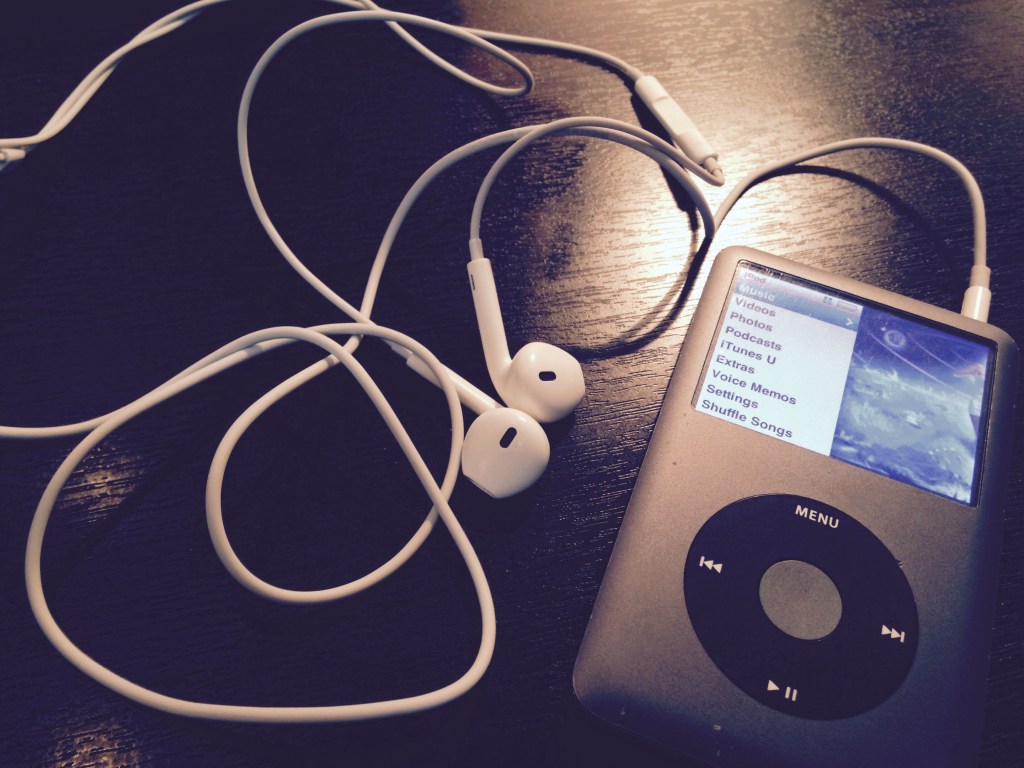
    Music is the perfect mood creator. It helps to set the imaginative landscape and gives the writer much-needed energy to put down words. And with a good pair of headphones and the right music, you can really create a cocoon for creativity.

    I’ve written on the subject of film soundtracks before, and in this post I’ll highlight my favourite pieces to listen to while writing such monstrous things like a first draft manuscript.

    Film and game music are designed to keep audiences engaged with visual content. And since, as writers, we’re creating visual scenes through the magic of words, these two mediums work beautifully with each other. Below are some of my favourite scores to listen to while writing.

    I should mention that, while I present these pieces in the context of writing, they’re suited to most creative tasks where a little mood music can go a long way.

    1. Man of Steel (Hans Zimmer)

    The soaring orchestrations and endlessness of the guitars set a beautiful sonic landscape for your words to flow. The deluxe edition has a brilliant “sketches” session, where Zimmer explores in a continuous mix the various ideas and themes that permeate the Superman reboot.

    2. Oblivion (M83)

    M83 created an electronic-infused score to this Tom Cruise science fiction blockbuster. It’s very atmospheric with lots of rising strings and melodies that almost urge you onward to the next word, the next paragraph, scene or chapter. It’s an especially nice listen when you’re wanting for inspiration, at the beginning of a writing session, and gives your imagination a nice kick start.

    3. Assassin’s Creed: Revelations (Jesper Kyd)

    This is a soundtrack designed to help you focus. Since it’s scored for the (insanely cool) Assassin’s Creed games, it works really well when writing scenes of intrigue, action, or contemplation. I sometimes listen to this to get into the writing mood.

    4. The Dark Knight Rises (Hans Zimmer/James Newton Howard)

    In case you don’t know by now, I’m a huge fan of Hans Zimmer. He’s my go-to guy for a musical fix when I’m working on a creative project. The Dark Knight Rise score is powerful, with great highs and lows perfect for almost any kind of scene. And if you just want to feel inspired, the rousing chant from the movie certainly does the trick, as does Junkie XL’s remix “Bombers over Ibiza”.

    5. Lord of the Rings: The Fellowship of the Ring (Howard Shore)

    You can never go wrong with Lord of the Rings. The quintessential high-fantasy drama, its soundtrack is powerful, rousing, and the perfect mix for creating an immersive creative environment. The final tracks, with Enya’s ethereal voice singing in Elvish, is hauntingly beautiful.

    6. Game of Thrones: Seasons 1-4 (Ramin Djawadi)

    Since I’ve gotten into the Game of Thrones world, I’ve become enchanted by its music. Ramin Djawadi scores a diverse soundtrack that’s a mixture of exotic eastern strings, thunderous trumpets and some chilling lyrics like Sigur Ros’s “Rains of Castamere.”

    7. Skyfall (Thomas Newman)

    Skyfall is one of my favourite new Bond movies, and Newman’s score is a mix of electronic and classical, that’s perfect for action scenes and scenes that are particularly dialogue-heavy. It’s also great to listen to before sessions, to get into that mood (along with Assassin’s Creed and Oblivion).

    8. Da Vinci’s Demons (Bear McCreary)

    Bear McCreary is a genius. The theme for Da Vinici’s is written as a musical palindrome –it’s the same forwards and backwards. The rest of the score is good mood-setting music, in a similar vain to the Assassin’s Creed score mentioned above.

    9. 300: Rise of an Empire (Junkie XL)

    Junkie XL is a rising electonic-based musician, and his score for the latest 300 film is action-packed with definite eastern accents that articulate the sequel’s plot line. “History of Artemisia” is my favourite track on this score.

    10. Inception (Hans Zimmer)

    Where do I begin with Inception? Well, firstly: “Time” is perhaps the best Hans Zimmer piece written. Ever. In fact, watch it in the video below, performed live by Zimmer and his orchestra. It’s emotionally-charged, carefully crafted and powerfully executed. As is the rest of this score, one of my all-time favourite motion picture scores. Its subtle piano notes, contrasted by heavy brass and thunderous drums, create a highly immersive environment that helps one emotionally connect with their work, as with the music itself. It’s Hans Zimmer at his finest.

    (I might write a future post on the status of the above-mentioned manuscript. It’s going as well as can be at this stage and I’m getting closer to the midpoint).