Life in Pixels

haud ignota loquor

Blog

  • Catching my breath

    Summer 2026 has been a whirlwind. I think it’s time to pause and just breathe for a moment. So much has happened – and there’s so much yet to come.

    I was reminded by WordPress that this little blog, Life in Pixels, is turning 20 next year. That makes me feel simultaneously old and momentarily dazzled by the ceaseless pace of time. This space has always been my little refuge amidst the tumultuous waters of cyberspace, and I intend for that to continue. Perhaps a retrospective on that is in order, but again –– I need to catch my breath.

    At least this time I have a verifiable excuse for the lack of words (both here, and in my other projects and things, like work on the mystery novel). Between lots of travel, work, wrangling with existential thoughts wrought by that two-letter doom-generator, I yearned for the blank page of the WordPress editor as a respite.

    UX Camp Amsterdam

    In early July I participated in UX Camp Amsterdam, a one-day “unconference” hosted by AmsterdamUX. The concept: there are no spectators, only participants.

    I ventured out of my comfort zone by volunteering to host a session – a talk about the connection between architecture and UX. I surprised even myself with this decision. It was daunting – presenting a 20min talk in a new country, to a group of strangers… but the organising team were really encouraging and everyone at the conference were extremely friendly and passionate about design. It was energising and reassuring to see how alive design is, and re-enforced my belief that community and conversation is paramount in this age of disconnection.

    But it did entail a lot of agonising over slide design and my talk content. A majority of the two months leading up to the event saw me either thinking procrastinating about writing the talk, nudging images pixel by pixel to get them positioned juuuuust right… or practicing.

    Travel

    I nearly missed UXCamp, because a day before the event, we were returning from a concert in Brussels. And it just so happened that this was a nightmare weekend for the southern Dutch rail network –– a series of faults around Rotterdam led to immense cancellations, delays, and mounting anxiety within as I contemplated not making it home in time. Thankfully, we made it (after a 2hr train journey that ended up taking 9hrs).

    Then, at the end of July/beginning of August, Manali and I travelled to London (my first time on a Eurostar, rocketing through the Channel Tunnel) where we spent time with my parents, celebrating my dad’s 60th. It was my second time to London, and this time I got to properly explore the city (that first time was a fleeting one-day stop on a whirlwind Eurotour back in 2010). I even got to watch The Odyssey *as Nolan intended*, on the massive BFI IMAX screen. Best film of the year for me.

    Trains, trains and more trains (not that I’m complaining! They were, after all, my first transportation fixation as a child, well before I became a certified #avgeek). We took the LNER from King’s Cross up to Edinburgh (unfortunately not from Platform 9 3/4). Four hours later, and we unlocked another country.

    Scotland is absolutely stunning. Edinburgh is a charming city jam-packed with culture. We were there just before the Fringe festival, and there were adverts for shows plastered across every available urban surface. I’d love to return for the Book Festival one day.

    It was also so refreshing to experience undulating landscapes (after living in Flatland for so long). We took a coach tour into the Highlands, and whilst I didn’t spot the elusive creature of the lake, we got to take in the endless expanse of Loch Ness. The crisp air and serene scapes formed the perfect setting to catch my breath after a stacked first half of ’26.

    Design notes

    It seems like everyone has a hot take on that two-lettered hottest of topics at the moment. I glimpse my LinkedIn feed and all I see is a lot of people saying a lot of things without saying anything at all. We’re living in a world of abundant content, but the substance is thin.

    So somewhere amidst preparing for UXCamp, attending a plethora of design meetups, and trundling along endless railways, I decided to try something new. Like I mentioned earlier, I want to continue maintaining this sacred space of contemplation, this last bastion of reflectivity against the wall of noise cluttering social feeds. Every post on these platforms clamours for attention with the now all-too-familiar patois and rhythm of generative writing. Social feeds like LinkedIn like this kind of drivel. It’s what drives engagement.

    But I like the quietness this blog offers. It’s not unlike a serene Scottish village perched amidst the rolling hills of the Highlands, at the edge of a vast and glassy loch. A space outside the bustle of catchphrases and emoji-riddled engagement baits.

    A space where I can interrogate the things in tech that are bothering me.

    And so Design Notes was born. It’s a series I’m starting where I aim to periodically post musings on design and tech, with deep dives and slower contemplative pieces that seek to cut through the hype, dissecting the sociotechnical implications of this new age.

    I posted my first entry already. And I have a backlog waiting to be refined. So watch this space (or my Instagram or LinkedIn for links to the pieces when they’re up).

    An autumn of wordsmithing

    Between Design Notes, working on the third draft of my mystery novel, and a potential revisit to the dystopian world of Devanagari (my first novel), this is shaping up to be a wordy autumn. Which suits me fine. I find that the cooling of the air and the browning of the leaves inspires a desire to pick up my pen and delve into my imagination.

    I’ve been bouncing ideas for a re-worked version of Devanagari with Manali, and the more I talk about these ideas the more intriguing they’re becoming. Whereas that first draft left me a little dazed and confused, I find these fresh ideas lending a clearer shape to the narrative, bringing me closer to what the story wants to be. I’m considering doing it as a short story as well – I miss the format, and I think the tighter space gives me just the right restrictions to be more creative. Let’s see how that shapes up; if it’s deemed good enough, you might spot it here.

    The next post will most likely be a Design Note that’s been gnawing at my brain for weeks now… ever since I watched Ronny Chieng’s Harvard commencement address and was inspired by his message. The words are in transit from my Leuchtturm to the screen. They’ll arrive here soon.
  • “Code is a material” = “Total architecture”

    Listening to Figma CEO Dylan Field’s opening address at Config 2026, I was reminded of a philosophy I was introduced to during my Masters in Architecture.

    I keep rattling on about how we’re needlessly fixating on tools and technologies, which only exacerbates the existential crisis so many designers are feeling in this “Age of the Machines”. So it’s no surprise that the chatter right now surrounds the new tools they launched — and how AI fits into the mix.

    But I find it more interesting to read between the lines in the release notes. The existential crisis abounds because we’re fixating on the toolkit, rather than contemplating how we could bridge that technological layer with the underlying aspects of craft that have driven our creative agency since the beginning of human-driven creative expression.

    What really stood out to me was the notion Figma posits: that “code is a material.” That it’s another surface we can use to express our creativity. If we dig beneath the surface, I see an interesting thing emerging in the product design space that architecture has, to some extent, been grappling with for aeons already.

    Figma’s “code is material” maps to an older philosophy — “total architecture” from Ove Arup. Arup was a visionary engineer and founder of the world-renowned built environment consultancy bearing his name. He advocated for breaking down domain silos, integrating engineering, architecture and aesthetics in the spirit of co-creation, of working together towards a single goal: beautiful, user-centered solutions. Total design removes the boundaries, blending traditional roles into a single philosophy, potentially flipping the script, where engineering can be beautiful, and architecture could be technical.

    When we compartmentalise the priorities, we create division. But fundamentally we’re all working towards a singular purpose, just from different angles. The Canvas represents the perfect space where these two seemingly disparate worlds can meaningfully collide, and I’m so glad that Figma returned their focus to this space once more. And presented the vision of something that brings “total architecture” to life through the very act of making.

    In product design, just like in other multidisciplinary domains, we often delineate design and development as distinct silos — shaping belongs in one domain, and execution in another. But the reality is not that clean. Sometimes the form can be found in the execution, sometimes the technicalities can be surfaced on the canvas. When we reframe the idea of code as a material that we can shape, manipulate and use like any other creative matter (a line, surface, light, texture…) it suddenly opens a new perspective on the whole agentic discourse. Instead of mindless prompting, Figma is presenting a vision of how we can reclaim our creative agency, moving further and not just faster.

    I find it fascinating how Figma is attempting to bring this abstract, foreign, sometimes frightening concept closer to the realm of design by choosing to shift the thinking and framing of what code is. For a while during this burgeoning era of AI-assisted (assisted used lightly there) creation, the prompt box has been the primary interaction surface. A shortcut. A magic genie that just makes and makes and makes and becomes almost addictive, creating this infinite loop of co-dependance, at the expense of our individuality and design voice. Code was still seen as the “other”. The thing that sat next to design, rather than what it truly is — something intrinsically part of it.

    Code being a material speaks to the idea that at its core, design encompasses a wider realm than just what the thing looks like. Code as a material gives us another dimension to shape feeling and emotion. When we step outside the prompt box, when we consider that the muliticoloured lines of text actually are a design asset in their own right, and when we bring that thinking back to the design canvas, we come closer to that vision of “total architecture.” That notion might even be extended — because unlike the built environment, the digital landscape is boundless, the multidisciplinary playing field becoming increasingly more level.

    Of course, I’m not saying designers must become builders. That’s a dangerous slope to slide down (and something I want to tackle in another post). What I’m getting at is: instead of the traditional view that code is an implementation mechanism used to bring static mockups to life, if we consider it as a material, a design tool, we can embrace code as an additional surface to explore creative expression. Agentic AI has just made it a lot more accessible, and having it live on the design canvas further compresses that space between thought and reality.

    The existential quandary abounds, perhaps even more so now that code becomes another surface for us to play with. But thinking of it in this aspect gave me a newfound perspective on the evolving nature of the designer, and the tools and materials we use to shape our ideas.


  • Marched through that month

    I honestly can’t believe it’s already April. I was so certain I’d written a post last month, and was shocked to see that I hadn’t! The last few weeks have been a whirlwind. As the season’s shifting to warmer weather and (muuuch) longer days, I’ve been a little out of sync with time. Which is ironic, as I’m a major watch geek and should be on top of this kind of thing.

    Anyway, a major reason for blitzing through last month without stopping by Life in Pixels has been the new novel. I finally completed the first (rough) draft and managed to get over 35 000 words on the second, typed draft in Scrivener. Lots of fixing to be done, but I’m really excited about this one. I believe it has the bones, and with a spring clean on the manuscript I’m hoping to have a readable draft ready for beta testing in the next month or so.

    I’ve also been toiling away at my own personal design system. I’m super excited about this – albeit it’s been giving me sleepless nights and never-ending ideation spirals. It’s been over a year since delving into UX, and I’ve taken the time to now consolidate my work, my ideas, and my progress, and distilled it into something I’m truly proud and excited about. You’ll have to watch this space for the announcement, which should be imminent.

    With spring blowing a kaleidoscope of colour through the (since arriving, very gloomy) Netherlands, it’s given me a compelling reason to step away from my desk and enjoy the beauty outside. I’ve done a 20km roundtrip cycle to Haarlem (which was major progress on my part, since last time I failed miserably at cycling that route), and in general just enjoying the longer days and vibrancy of Amsterdam.

    I’ll be taking a much needed break from writing and designing at the end of this month for a week, and Anthony Horowitz’s latest novel (Marble Hall Murders) arrived on my Kindle just in time for me to jump into during my time off. I can’t wait.

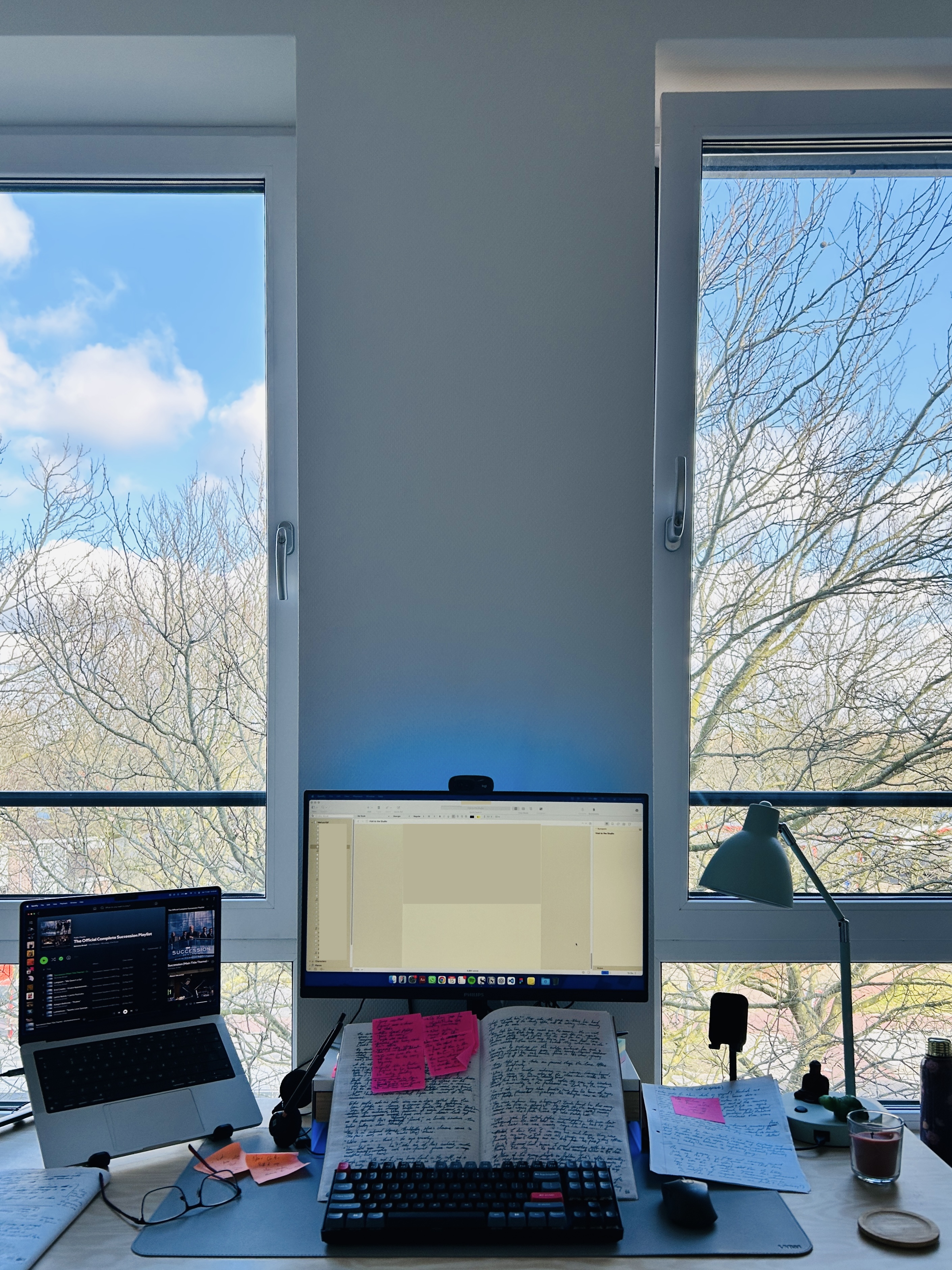
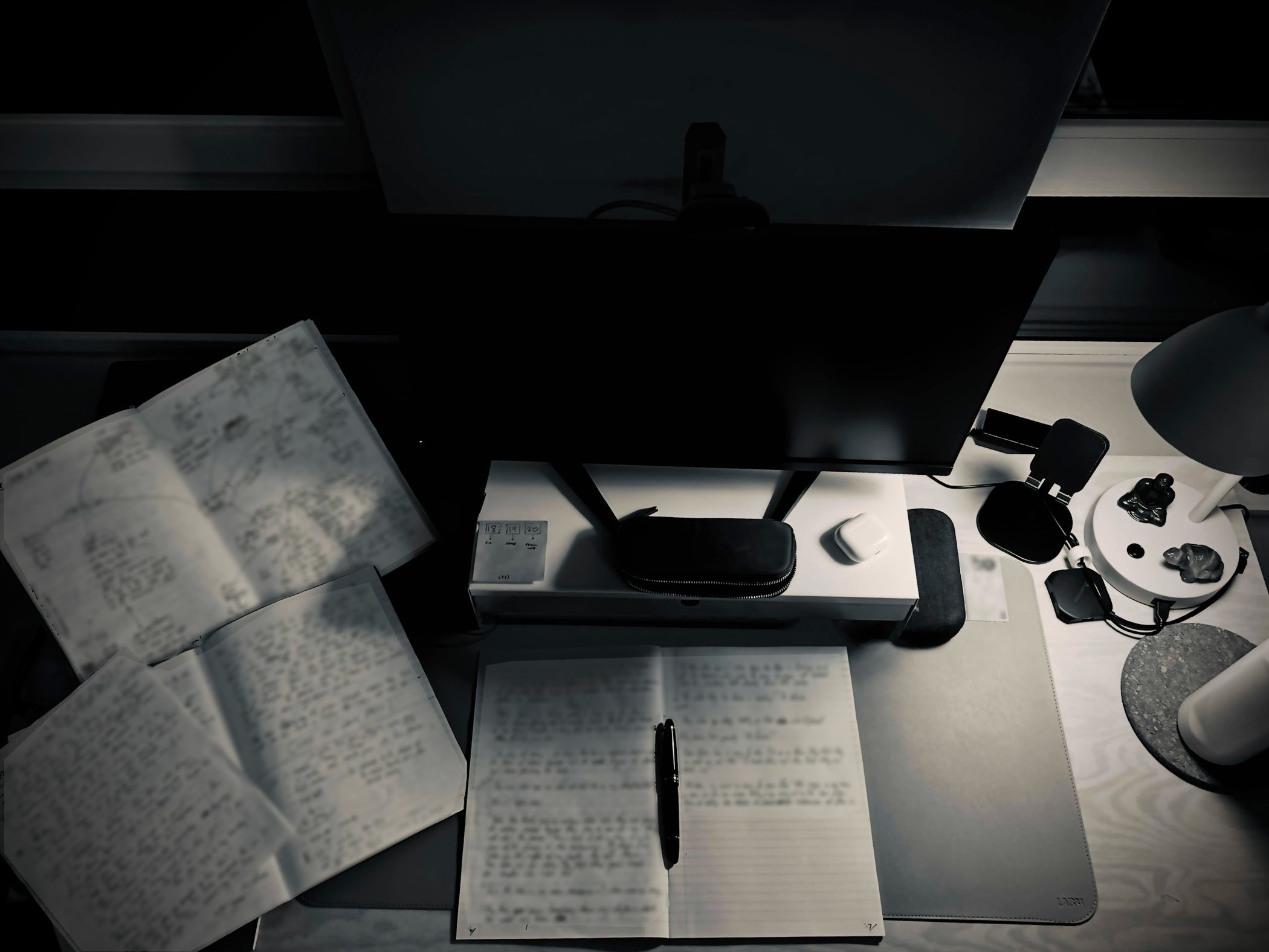
    Until next time, here’s a snippet of my daily view and the chaos of words and post-its that surround me on the daily.


  • A Trip to the Polderbaan – and a quick update on the new novel

    A brief respite from the gloomy winter weather offered a prime opportunity to take a cycle up to the famous Polderbaan runway at Schiphol Airport. This was perhaps my longest cycle yet, and as my confidence on two wheels continues to build, I admit I still have a ways to go in terms of my fitness level.

    It was quite exhilarating to see the big jets up close as they rotated right in front of me. Even better was being greeted by the roar of a 747-400 cargo liner as I arrived at the spotters area. The Queen of the Skies is my all-time favourite aircraft, and so it was quite fitting to see one as I made my first trek to this mecca of aviation.

    I promised another post in Feb, and hopefully this one delivers. I’ve been deep into completing the first draft of the new book. I set the ambitious goal of being done by the end of the shortest month in the year, and the way things are going, I think I might actually make it. This weekend alone I blasted through two chapters, and I’ve been tinkering with the “endgame” chapter (as I call it – the big reveal) on Scrivener itself. So working between two modes of writing keeps things exciting, at the least.

    As we move towards the third month, and approach the end of Q1, I am also starting to prepare for the design devleopment on MyDojo, and line things up for the actual development.

    Next time I drop by the blog, I’m hoping it’ll be a positive update on the first draft – perhaps even a title reveal. Let’s see.


  • It’s already February

    Already one month down, and I’m pleased with the progress of my “projects, projects, projects…“, which chug along at a decent pace.

    We’ve begun usability testing on some initial wireframes for the new MyDojo. I’m looking forward to delving into the user insights and starting to progress the designs towards high-fidelity mockups. The next big challenge will be to translate the (still in progress) system architecture into Flutter, which I’ll be using to develop the mobile app.

    I’ve been using Notion to keep track of the myriad items in the backlog, and it really does keep me sane – between managing my work life, my reading list, and my software dev efforts, it’s become a second brain for me.

    On the novel front, I’m making steady progress towards the first draft of the mystery novel I started writing at the beginning of last year. I’m about 23 out of 35 chapters done. Writing by hand is a nice form of detachment, but I really do hope I can decipher my handwriting when it comes to transferring the entire novel into Scrivener. The goal is to get this first draft on paper by end of this month, which is daunting in and of itself. It took me about 3 years to write Devanagari, which I still honestly haven’t finished (as I need to revise it into a coherent 2nd draft).

    But I’ve found writing this mystery novel to be a lot easier. It’s set in a place I know (Durban), the characters fascinate me (one in particular, a nasty guy who may or may not be the villain, and whom I can’t wait to introduce you all to 😉), and by writing the entire first draft by hand, I can be safe in the knowledge that the mere act of transference to Scrivener will be a leg-up with the 2nd draft.

    I’ve also started attending the Amsterdam UX meetups, which has been a great way to connect with the local UX community. Both talks (last month’s State of UX in NL and yesterday’s leadership session) were inspiring, and a great way to get out and talk shop with like-minded folk.

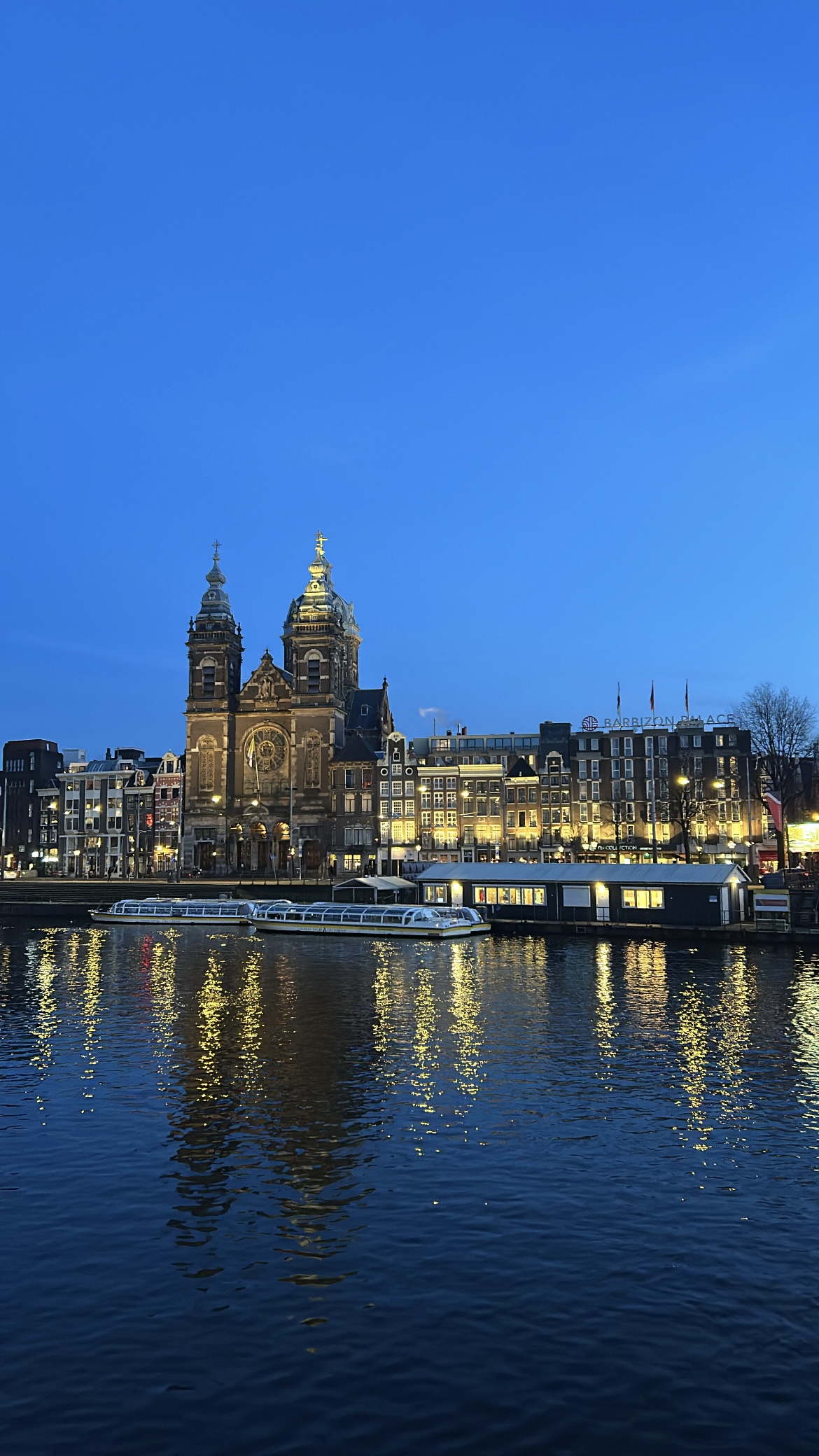
    With the weather marginally improving (slightly longer days, with more welcome sunshine), getting out to the Amsterdam UX meetups gives me a good excuse to snap pics of this beautiful city like the one above.

    Until next time (hopefully not only next month), it’s “all for now.”